YouTube
Open YouTube
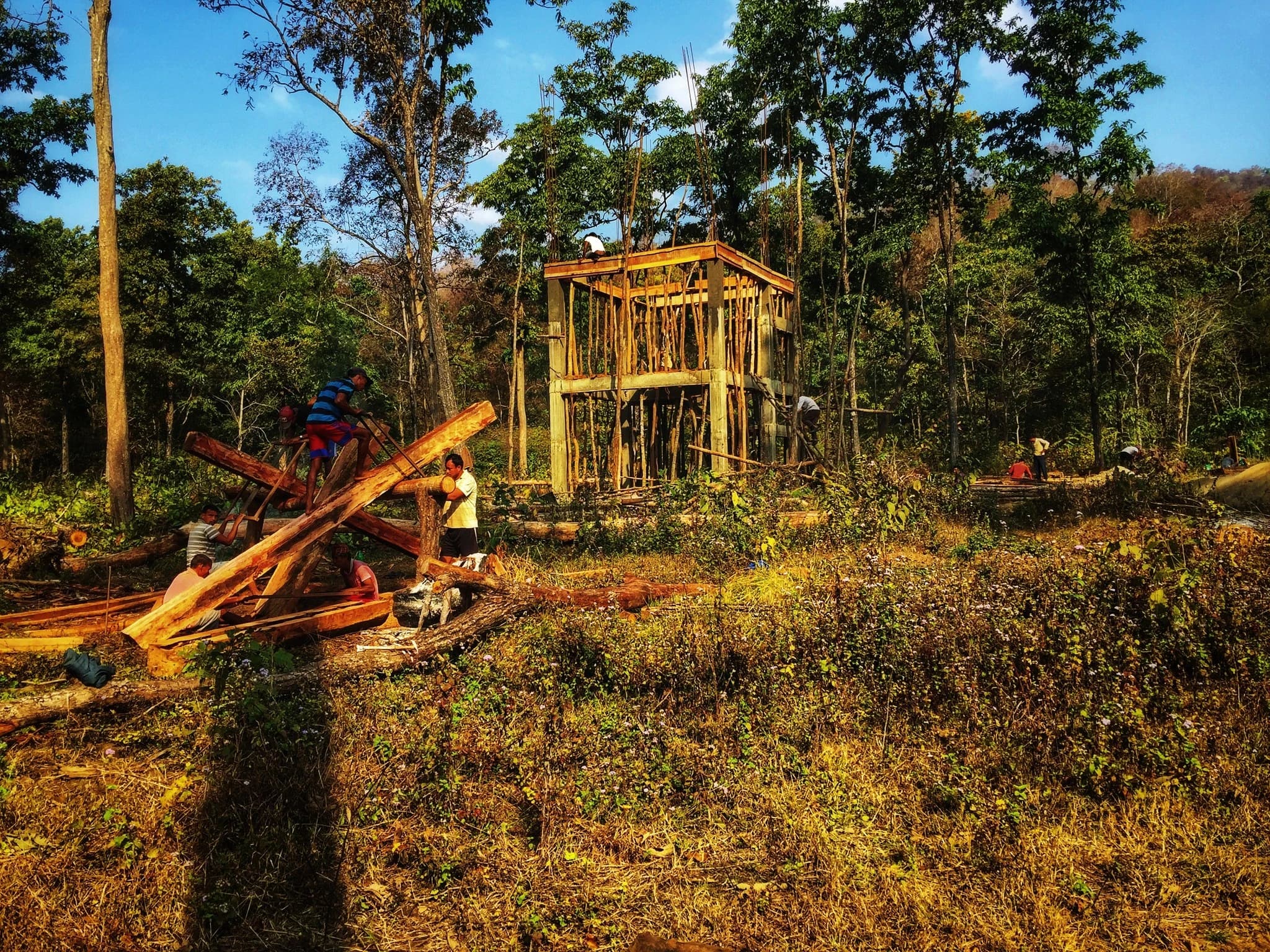
Banke National Park (बाँके राष्ट्रिय निकुञ्ज), established in 2010 as Nepal's tenth national park and formally recognized by the government as a 'Gift to the Earth', spans 550 square kilometers across the rugged Chure-Bhabar and Terai lowlands of Banke District, buffered by an additional 343 square kilometers of community forestry. Strategically adjoined to the internationally acclaimed Bardia National Park to the west and India's Suhelwa Wildlife Sanctuary to the south, Banke National Park serves as a crucial trans-boundary biological corridor within the Terai Arc Landscape (TAL). The protected area is characterized by eight distinct ecosystem types, ranging from towering Sal (*Shorea robusta*) woodlands and riverine savannahs to mixed deciduous hill forests along the southern slopes of the Siwalik hills. The park provides vital sanctuary for endangered Royal Bengal tigers, wild Asian elephants, four-horned antelopes (*chausingha*), striped hyenas, leopards, and over 300 documented bird species including the great hornbill and Bengal florican. Visitors can embark on guided jungle jeep safaris, nature wilderness walks, and birdwatching excursions based from the park headquarters at Obhari along the East-West Highway, experiencing an untamed, pristine wildlife frontier in western Nepal.
Banke National Park (बाँके राष्ट्रिय निकुञ्ज), established in 2010 as Nepal's tenth national park and formally recognized by the government as a 'Gift to the Earth', spans 550 square kilometers across the rugged Chure-Bhabar and Terai lowlands of Banke District, buffered by an additional 343 square kilometers of community forestry. Strategically adjoined to the internationally acclaimed Bardia National Park to the west and India's Suhelwa Wildlife Sanctuary to the south, Banke National Park serves as a crucial trans-boundary biological corridor within the Terai Arc Landscape (TAL). The protected area is characterized by eight distinct ecosystem types, ranging from towering Sal (*Shorea robusta*) woodlands and riverine savannahs to mixed deciduous hill forests along the southern slopes of the Siwalik hills. The park provides vital sanctuary for endangered Royal Bengal tigers, wild Asian elephants, four-horned antelopes (*chausingha*), striped hyenas, leopards, and over 300 documented bird species including the great hornbill and Bengal florican. Visitors can embark on guided jungle jeep safaris, nature wilderness walks, and birdwatching excursions based from the park headquarters at Obhari along the East-West Highway, experiencing an untamed, pristine wildlife frontier in western Nepal.
1 available
1 available
YouTube
Open YouTube
Discover More

Bageshwori Temple (बागेश्वरी मन्दिर तथा जुँगे महादेव), located in the bustling historic heart of Nepalgunj Sub-Metropolitan City-2, is the supreme mother-goddess pilgrimage shrine and religious pride of Banke District. Revered as an ancient Shaktipeeth, the sacred sanctuary is dedicated to Goddess Bageshwori (an incarnation of Goddess Durga/Parvati). The temple is world-famous for its central sacred pond (*Bageshwori Talau*), at the center of which stands the legendary temple of 'Munghe Mahadev' (जुँगे महादेव / Shiva with a mustache)—the only known idol of Lord Shiva in the entire world depicted sporting a traditional Nepali mustache. Legend attributes the founding of the temple to the revered Nath yogis, who discovered the svayambhu (self-manifested) footprint of the goddess in ancient times. During Vijaya Dashami, Chaite Dashain, Maha Shivaratri, and Maghe Sankranti, the temple campus becomes a vibrant spiritual spectacle, drawing hundreds of thousands of Hindu, Buddhist, and Jain devotees from across Nepal and neighboring Indian states. Pilgrims circumambulate the holy pond, offer tridents and bells, and participate in colorful evening aartis.

Rani Talau (रानी तलाउ तथा ऐतिहासिक उद्यान), gracefully situated in Nepalgunj Sub-Metropolitan City-8 near the historic city center, is an iconic Rana-era oval recreational lake and landscaped botanical park. Commissioned over a century ago during the late 19th-century administrative founding of modern 'Naya Muluk' Nepalgunj under Rana prime ministers, Rani Talau (Queen's Pond) was engineered as an ornamental royal reservoir and public water garden. Encircled by paved stone promenades, blooming seasonal flower beds, towering sub-tropical trees, and musical fountains, the tranquil lake features a central island gazebo reached via decorative footbridges. Today, Rani Talau serves as Nepalgunj's premier urban eco-park and leisure sanctuary, offering paddle boating across the calm waters, shaded rest pavillions, and an enchanting evening gathering spot for families, travelers, and morning joggers seeking relaxation amid the vibrant cultural tapestry of Nepalgunj.

Bardia National Park is Nepal's largest undisturbed wilderness area in the Terai lowlands, covering 968 square kilometres of sal forest, grassland, and riverine habitat along the Karnali and Babai rivers. Established as a national park in 1988, Bardia is widely considered the best place in Nepal to spot wild Bengal tigers in their natural habitat. The park's large, intact ecosystem supports significant tiger populations alongside greater one-horned rhinoceros, wild Asian elephants, swamp deer (barasingha), gharial and mugger crocodiles, Gangetic river dolphins, four-horned antelope, and over 400 bird species. Unlike the heavily visited Chitwan National Park to the east, Bardia receives far fewer tourists, meaning wildlife encounters are less crowded and the landscape feels truly wild. Safari activities from Thakurdwara (the park's main visitor hub) include jeep safaris, guided walking safaris, elephant-back observation, bird watching, and dugout canoe rides on the Karnali River. The best wildlife sightings are from October through May. Access is from Ambassa on the Mahendra Highway or via flight to Nepalgunj followed by a 2-hour road journey. The nearest visitor accommodation hub at Thakurdwara lies at the park's main entrance.

Known as one of eastern Nepal's most important wetland ecosystems, Betana Wetland is a beautiful freshwater lake surrounded by dense forests and rich biodiversity in Morang district. The wetland is a paradise for birdwatchers, hosting numerous resident and migratory bird species throughout the year, making it one of the region's top destinations for nature enthusiasts. Visitors can enjoy peaceful boating on the lake while taking in the tranquil scenery of lush greenery and calm waters. The area is also home to a variety of fish, reptiles, and other wildlife, highlighting its ecological importance. Well-maintained walking trails, picnic spots, and a peaceful environment make Betana an ideal getaway for families, photographers, and travelers seeking relaxation in nature. Its serene atmosphere and vibrant ecosystem offer a perfect escape from the busy pace of city life. Whether you're observing rare birds, exploring the wetlands, or simply enjoying the beauty of one of Nepal's finest natural habitats, Betana Wetland promises an unforgettable experience for every visitor.

Known as Chitwan National Park, and formerly called the Royal Chitwan National Park, this UNESCO World Heritage Site in Chitwan district is Nepal's first national park and one of Asia's most celebrated wildlife destinations. Established in 1973 and recognized as a UNESCO World Heritage Site in 1984, the park protects vast expanses of Sal forests, riverine forests, grasslands, and wetlands along the Rapti, Reu, and Narayani rivers. It is world-renowned for conserving the endangered one-horned rhinoceros, Royal Bengal tiger, Asian elephant, gharial crocodile, sloth bear, leopard, and more than 600 species of birds, making it a paradise for wildlife enthusiasts and birdwatchers. Visitors can experience thrilling jeep safaris, canoe rides, guided jungle walks, birdwatching tours, and cultural programs showcasing the traditions of the indigenous Tharu community. The best time to visit is from October to March, when pleasant weather and better visibility provide excellent opportunities for wildlife sightings. Located just a short distance from Sauraha, the park is one of Nepal's most accessible and rewarding eco-tourism destinations. Whether you're seeking unforgettable wildlife encounters, exciting jungle adventures, or an immersive experience in Nepal's natural heritage, Chitwan National Park (Royal Chitwan National Park) offers an extraordinary journey into the heart of the Terai wilderness.

Dhorpatan Hunting Reserve, gazetted in 1987 and encompassing 1,325 square kilometres across the junction of Baglung, Myagdi, and Rukum East districts, is Nepal's only established hunting reserve and one of the country's most pristine high-altitude ecological sanctuaries. The reserve is anchored by the breathtaking Dhorpatan Valley, a vast, flat sub-alpine depression situated at an altitude of approximately 2,850 metres, surrounded by towering snow-capped crests of the Dhaulagiri and Gurja Himal ranges. Ecologically, Dhorpatan spans an dramatic altitudinal gradient from 2,000 metres up to 7,246 metres at Churen Himal. It encompasses lush montane oak-rhododendron woodlands, temperate blue pine and fir forests, expansive alpine moors, and barren glaciated moraines. The reserve is internationally famous for conserving healthy populations of the Himalayan blue sheep (Bharal) and Himalayan tahr, which graze along the craggy scree slopes. It also harbors endangered snow leopards, Himalayan musk deer, red pandas, Himalayan black bears, and the vibrant Danphe (Himalayan monal). Under strict conservation regulation, sustainable sport hunting permits are issued through international auction by the Department of National Parks and Wildlife Conservation across seven designated hunting blocks (Seng, Dogadi, Gustang, Barse, Fagune, Surtibang, and Sundaha). Beyond hunting, Dhorpatan is an extraordinary wilderness trekking and cultural destination. The valley is home to a historic Tibetan refugee settlement with the traditional Dhorpatan Buddhist Gompa, an alpine grass airstrip, and ancient migratory grazing routes used by Magar and Chhetri transhumant pastoralists.