YouTube
Open YouTube
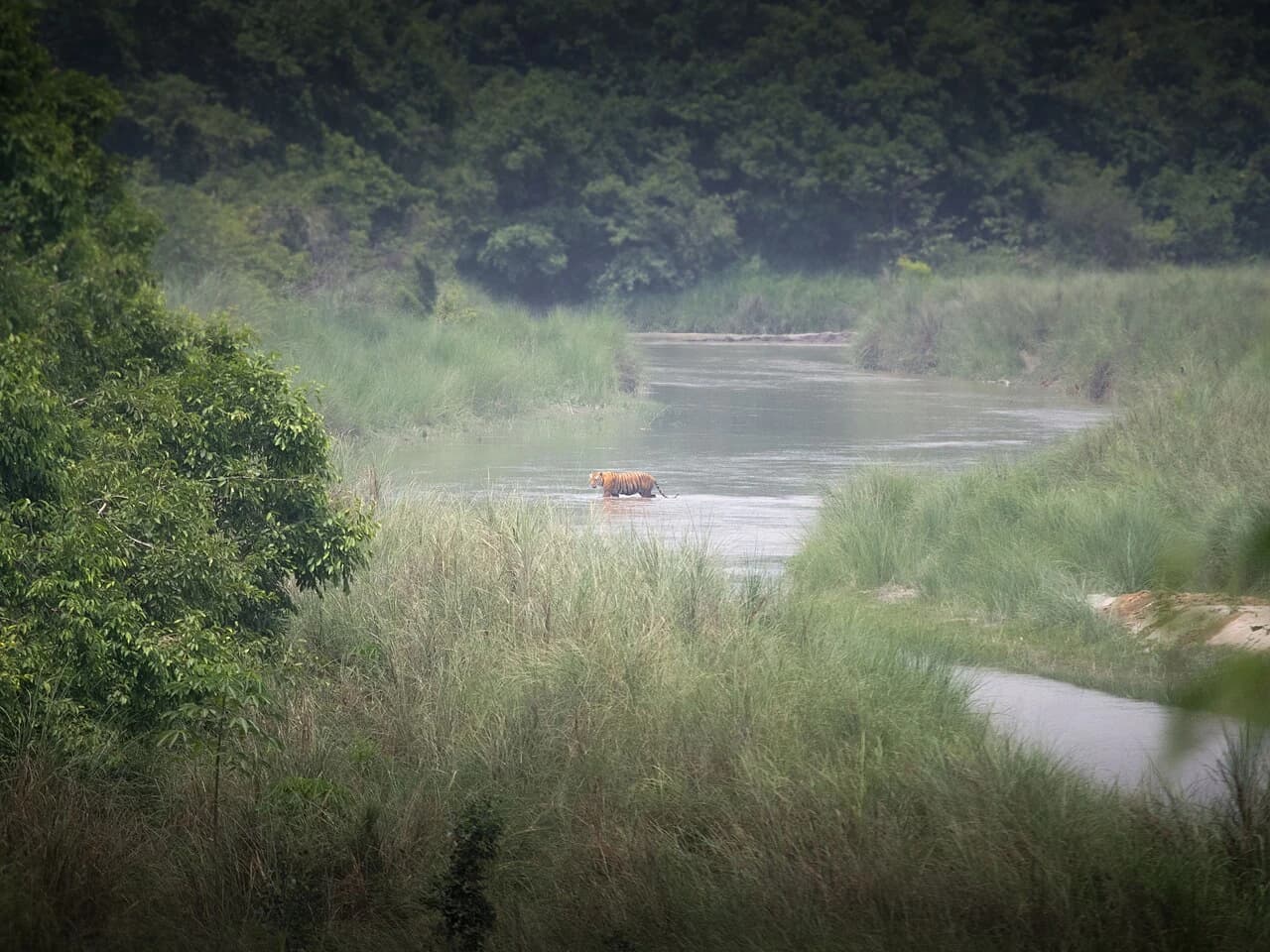
Bardia National Park is Nepal's largest undisturbed wilderness area in the Terai lowlands, covering 968 square kilometres of sal forest, grassland, and riverine habitat along the Karnali and Babai rivers. Established as a national park in 1988, Bardia is widely considered the best place in Nepal to spot wild Bengal tigers in their natural habitat. The park's large, intact ecosystem supports significant tiger populations alongside greater one-horned rhinoceros, wild Asian elephants, swamp deer (barasingha), gharial and mugger crocodiles, Gangetic river dolphins, four-horned antelope, and over 400 bird species. Unlike the heavily visited Chitwan National Park to the east, Bardia receives far fewer tourists, meaning wildlife encounters are less crowded and the landscape feels truly wild. Safari activities from Thakurdwara (the park's main visitor hub) include jeep safaris, guided walking safaris, elephant-back observation, bird watching, and dugout canoe rides on the Karnali River. The best wildlife sightings are from October through May. Access is from Ambassa on the Mahendra Highway or via flight to Nepalgunj followed by a 2-hour road journey. The nearest visitor accommodation hub at Thakurdwara lies at the park's main entrance.
Bardia National Park is Nepal's largest undisturbed wilderness area in the Terai lowlands, covering 968 square kilometres of sal forest, grassland, and riverine habitat along the Karnali and Babai rivers. Established as a national park in 1988, Bardia is widely considered the best place in Nepal to spot wild Bengal tigers in their natural habitat. The park's large, intact ecosystem supports significant tiger populations alongside greater one-horned rhinoceros, wild Asian elephants, swamp deer (barasingha), gharial and mugger crocodiles, Gangetic river dolphins, four-horned antelope, and over 400 bird species. Unlike the heavily visited Chitwan National Park to the east, Bardia receives far fewer tourists, meaning wildlife encounters are less crowded and the landscape feels truly wild. Safari activities from Thakurdwara (the park's main visitor hub) include jeep safaris, guided walking safaris, elephant-back observation, bird watching, and dugout canoe rides on the Karnali River. The best wildlife sightings are from October through May. Access is from Ambassa on the Mahendra Highway or via flight to Nepalgunj followed by a 2-hour road journey. The nearest visitor accommodation hub at Thakurdwara lies at the park's main entrance.
1 available
3 available
YouTube
Open YouTube
YouTube
Open YouTube

YouTube
Open YouTube
Discover More

Badhaiya Tal (बढैयाताल), spanning over 105 hectares in Badhaiyatal Rural Municipality-8, is celebrated as the largest natural lake and wetland sanctuary in Bardiya District and one of the premier avian biodiversity hotspots in southwestern Nepal. Formed by ancient natural river meanders and perennial seepage springs, this vast shallow lake is recognized as a vital wetland habitat supporting over 100 resident and wintering migratory bird species. Every winter between October and March, thousands of waterfowl from Siberia, Mongolia, and the Tibetan Plateau make Badhaiya Tal their seasonal home—including painted storks, Asian openbills, sarus cranes, bar-headed geese, ferruginous ducks, and cotton pygmy geese. Surrounded by lush green paddy plains and indigenous Tharu farming hamlets, the lake is developed as an eco-tourism destination equipped with wooden observation towers for birdwatching, traditional wooden paddle boats for gliding through blooming lotus patches, and scenic peripheral walking promenades. It offers nature lovers, ornithologists, and photographers a peaceful haven of undisturbed wetland life.

Bagalamukhi Temple (बगलामुखी मन्दिर), located in Gulariya Municipality Ward 5, is the foremost historic Shakti peeth and prominent Hindu pilgrimage shrine in the district headquarters of Bardiya. Established in 1937 AD (1994 BS), the temple is dedicated to Goddess Bagalamukhi (Pitambara), one of the ten revered Mahavidyas in Tantric Hinduism, celebrated as the vanquisher of obstacles, negativity, and legal tribulations. The spacious temple precinct comprises an ornate central sanctum, sacred ponds (Kundas) for ritual purification, peaceful brick-paved courtyards, ancient Peepal trees, and subsidiary shrines dedicated to Lord Shiva, Hanuman, and Ganesh. The temple is the focal point of grand religious celebrations during Sharadiya Navaratri and Chaite Dashain, drawing large congregations of devotees from across Bardiya, Banke, Surkhet, and across the border from Uttar Pradesh. Its tranquil spiritual ambiance in the heart of Gulariya makes it a foundational cultural anchor for visitors exploring the historic district center.

Kothiyaghat Bridge (कोठियाघाट पुल), spanning 1,015 meters across the Geruwa River (the eastern major branch of the mighty Karnali River) between Rajapur Municipality and Geruwa Rural Municipality, is one of the most monumental engineering landmarks and scenic riverfront promenades in western Nepal. Supported by 42 massive concrete spans along the Postal Highway (Hulaki Rajmarga), the bridge famously held the distinction of being the longest multi-span concrete bridge in Nepal upon its completion in 2014. It dramatically transformed regional connectivity by linking the fertile, once-isolated agrarian river island of Rajapur with mainland Bardiya and the rest of the nation. Beyond its vital transit role, Kothiyaghat Bridge has become a renowned tourism attraction and popular evening promenade. Travelers and photographers visit the bridge to take in panoramic vistas of the expansive braided gravel channels, observe Gangetic river dolphins leaping in the deep current pools, and marvel at spectacular golden sunsets setting over the Karnali delta against the silhouette of the distant Chure hills.

Krishnasar Conservation Area (कृष्णसार संरक्षण क्षेत्र), situated across 172 hectares in Khairapur of Gulariya Municipality, is Nepal's only dedicated wildlife sanctuary specifically established to protect the endangered Blackbuck (Antilope cervicapra), locally known as Krishnasar. Formally gazetted by the Government of Nepal in 2009 (2065 BS) under the Department of National Parks and Wildlife Conservation, the sanctuary protects the country's last surviving wild population of these magnificent antelopes, renowned for the elegant long spiraled horns and striking dark coats of the mature males. Travelers can observe herds of hundreds of blackbucks grazing freely across open tropical grasslands and gentle savannah scrub. The conservation area features elevated wooden watchtowers (Machans) for unobstructed 360-degree wildlife viewing and photography, serene shaded nature trails, and a visitor interpretation center educating travelers on community-based grassland conservation. Located just four kilometers from district headquarters Gulariya, Krishnasar Conservation Area offers an intimate, tranquil safari experience completely distinct and independent from the dense forests of Bardia National Park.

Thakur Baba Temple (ठाकुरबाबा मन्दिर), situated in Thakurbaba Municipality-9, is an ancient sacred Hindu pilgrimage temple dedicated to Lord Vishnu and the venerated spiritual and cultural heartland of western Bardiya District. According to historical chronicles and regional folklore, the shrine dates back to the medieval Sen and Malla periods, established around a self-manifested stone deity worshiped as 'Thakur Baba'. The temple holds immense spiritual significance for the indigenous Tharu community, who venerate Thakur Baba as their supreme ancestral protector and guardian of agrarian fertility and forest harmony. The complex features traditional tiered wooden pagoda architecture, sacred bell towers, ancient stone carvings, and tranquil sal tree canopies. Every year on Maghe Sankranti (mid-January), the temple grounds host the grand historic Thakurdwara Mela, attracting tens of thousands of pilgrims from across western Nepal and neighboring Indian states for holy river ablutions, ritual worship, and vibrant Tharu folk performances. As the spiritual namesake of both the historic gateway village of Thakurdwara and the Thakurbaba Municipality, the temple represents the deep cultural soul of the region.