
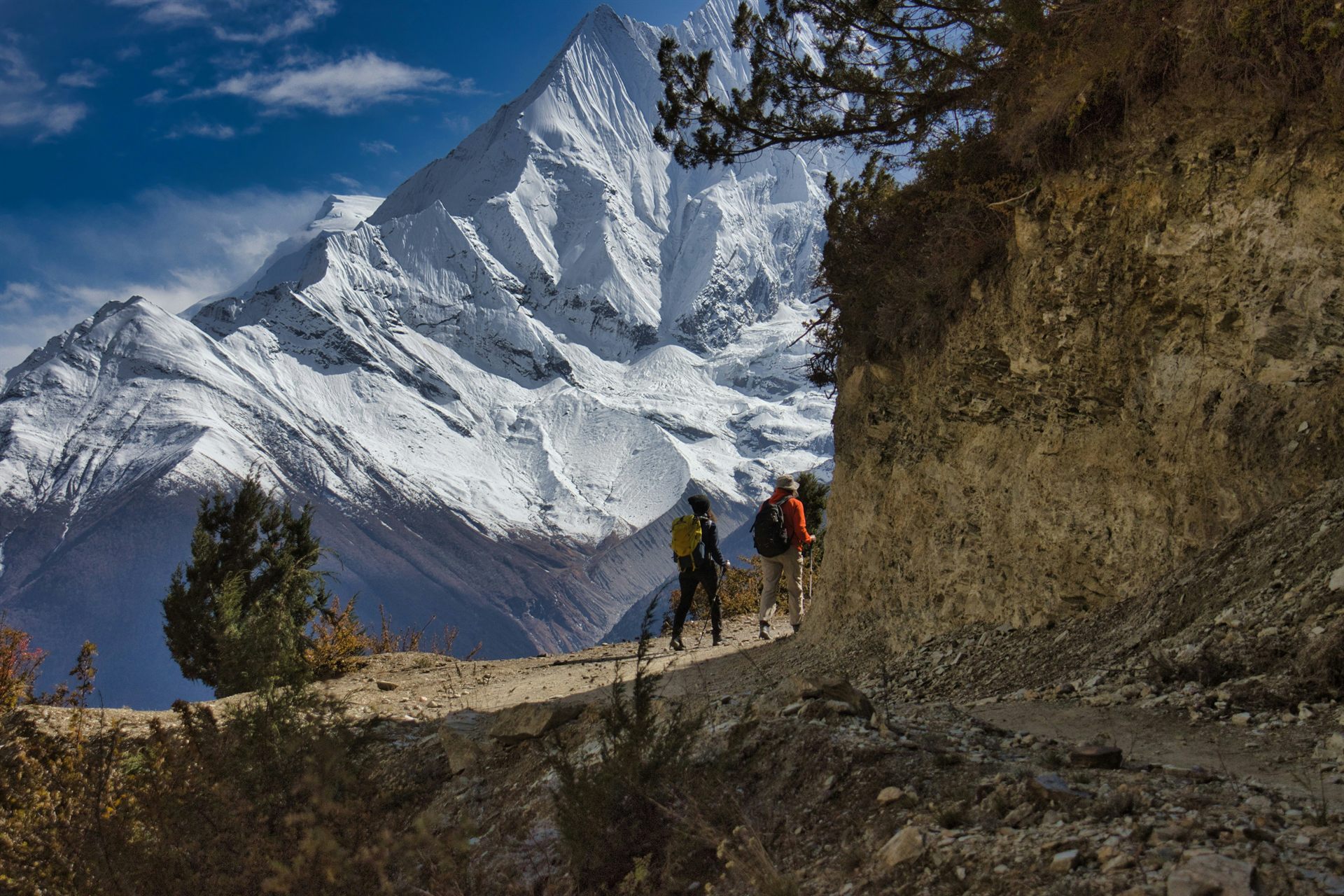
Discover Nepal.Plan smarter. Travel better.
VoyaNest combines curated destinations, interactive maps, route context, and AI itinerary guidance so every Nepal journey starts with clarity.
Map-first discovery
Curated Nepal places
Route context
Distance and travel time
AI itinerary
Personalized planning
22+
Curated destinations
8+
District signals
6+
Experience categories
1k+
AI journey drafts
How VoyaNest works
From inspiration to a journey you can actually follow
The product flow stays centered on your journey, not on booking inventory or generic travel listings.
Explore
Search destinations, districts, hidden gems, and nearby attractions on a map-first surface.
Build Journey
Select places, reorder stops, and shape your route before committing to the trip.
Generate AI Itinerary
Let AI organize days, travel advice, optional stops, and journey context from your saved route.
Start Your Adventure
Open your saved journey, view the route, and keep the plan ready when travel begins.
Feature highlights
Planning tools that work together, not in isolation
AI Planner
Turn saved places and route context into day-wise travel guidance with clear recommendations.
Journey Builder
Create a sequence of stops, rename trips, save routes, and keep each plan editable.
Smart Route Context
See estimated distance and travel time before asking AI to organize the itinerary.
Hidden Gems
Move beyond obvious listings and discover places that match mood, geography, and intent.
Personalized Recommendations
AI ranks nearby candidates, while you approve what becomes part of the journey.
Interactive Maps
Search geography, inspect markers, focus locations, and understand each route spatially.
Featured destinations
Start with places that already carry a story

Aalital Lake
Aalital is the largest natural freshwater lake in Dadeldhura District, situated at an elevation of 800 metres in the verdant southern foothills of the Mahabharat range in Ward 3 of Aalital Rural Municipality. Spanning approximately 1,175 metres in length, 400 metres in width, and depths reaching up to 22 metres, the expansive natural water body is cradled within dense subtropical sal, pine, and mixed deciduous forests. Famed for its pristine natural serenity, avian biodiversity, and scenic reflections of the surrounding hills, Aalital has emerged as a premier eco-tourism destination equipped with community paddle boating facilities, lakeshore nature trails, a lakeside suspension bridge, a scenic viewing tower, and the revered local shrine of Sameji Devata on its forested banks.
Entry: Free

Ajayamerukot Palace Complex
Ajayamerukot is a monumental medieval archaeological citadel and palace complex established in the 13th to 14th century CE as the royal winter capital of the Katyuri and Doti Rainka Kings. Perched defensively atop an isolated mountain spur in Ward 2 of Ajaymeru Rural Municipality at an altitude of 1,313 metres, the site is bordered on three sides by sheer ravines carved by the Chamdola and Baunera streams. The extensive archaeological precinct preserves the foundation platforms of a multi-tiered stone royal palace, expansive paved courtyards, an assembly hall (Baithak), carved Shikhara-style stone dewals, and defensive ramparts. An exceptional architectural marvel of the site is the subterranean Rani Naula (रानी नाउला), an intricately dressed stone step-well featuring arched corridors and classical Katyuri decorative friezes. Recognized as an official Department of Archaeology monument under ID NP-DD-04 and nominated on Nepal's UNESCO World Heritage Tentative List, Ajayamerukot stands as one of the most significant medieval monarchical complexes in the Himalayas.
Entry: Free

Alamdevi Temple
Alamdevi Temple (आलमदेवी मन्दिर), situated in Lasargha within Kaligandaki Rural Municipality Ward 3 of Syangja District, is one of the most historically significant and sacred pilgrimage shrines in western Nepal. Venerated as the ancestral tutelary deity (Kuldevi) of the Shah kings of Nepal, the shrine traces its spiritual origin back over seven centuries. According to historical chronicles, when Prince Mincha Khan and his descendants established the principality of Nuwakot in Syangja and later expanded toward Kaski and Lamjung, Alamdevi was established as their protective sovereign deity. To this day, royal priests and state representatives continue to conduct solemn rituals here during major national festivals. A fascinating and distinctive ritual feature of Alamdevi is its open-air architecture and priestcraft tradition. Unlike typical multi-tiered Hindu pagodas, the main sanctum is a subterranean, roofless pit covered by stone and sacred sal trees, where the deity is worshipped as a hidden divine force. Furthermore, in an enduring testament to historic syncretism between the hill Magar populace and the ruling dynasty, the chief officiating priests (pujaris) belong strictly to the Rana Magar clan. Only the appointed Magar priest is permitted to enter the inner sanctum to perform esoteric Vedic-Tantric rituals and offer daily oblations. Perched on a forested hill overlooking the sweeping bends of the Kali Gandaki valley, Alamdevi attracts tens of thousands of pilgrims, particularly during Chaitra Dashain and the autumn Bada Dashain festivals. Devotees visit from across Nepal and India to seek blessings for protection, courage, and prosperity. The shrine is accessible via a motorable road branching off from the Siddhartha Highway at Waling or Galyang through scenic rural ridgelines.
Entry: Free

Alapeshwar Cave (Alpeswor Gupha)
Alapeshwar Cave (locally known as Alpeswor Gupha or Alapu Cave), nestled within the forested hills of Kusma Municipality Ward 7 near Gyadichaur and the Silmi forest corridor, is an extraordinary natural speleological cave network in Parbat District. Discovered in recent decades by local community members, the cave extends several hundred metres into subterranean limestone bedrock, offering an intriguing subterranean exploration destination for eco-tourists and adventure travelers. The interior of Alapeshwar Cave features multiple natural limestone chambers linked by winding rock corridors. Over tens of thousands of years, mineral-rich seepage water has sculpted spectacular calcite formations, including delicate stalactites hanging from cavern ceilings, massive stalagmites rising from the floor, flowstone curtains, and crystalline rock terraces. In several chambers, clear subterranean spring water flows over the smooth limestone floor, creating natural underground wading pools and tranquil echo chambers. Local development committees have installed solar-powered illumination along the main walking galleries, safe metal ladders, and protective handrails to facilitate visitor access without disturbing the delicate cave ecology and resident microbat colonies. Unlike heavily visited commercial caves, Alapeshwar retains a raw, uncommercialized subterranean ambiance that rewards curious travelers exploring the diverse canyon landscape of Kushma.
Entry: Free

Ama Yangri Peak
Known as Ama Yangri Peak, and also called Ama Yangri or Ama Yangri Danda, this spectacular Himalayan viewpoint in the Helambu region of Sindhupalchok district is one of Nepal's finest short trekking destinations. Rising to an elevation of approximately 3,771 meters, the peak is revered by the local Hyolmo (Yolmo) community, who consider it a sacred mountain blessed by a protective mother deity, from which the name "Ama" (Mother) is derived. The trek to the summit passes through enchanting rhododendron and pine forests, colorful prayer flags, traditional monasteries, and peaceful Hyolmo villages, offering a perfect blend of natural beauty and cultural heritage. From the summit, visitors are rewarded with breathtaking 360-degree panoramic views of the Langtang, Jugal Himal, Dorje Lakpa, Ganesh Himal, Gaurishankar, and even Mount Everest on exceptionally clear days. The peak is especially famous for its mesmerizing sunrise, when the first rays of light illuminate the snow-capped Himalayas in brilliant shades of gold and orange. Spring and autumn provide the best trekking conditions, with blooming rhododendrons, pleasant weather, and crystal-clear mountain vistas. Whether you're seeking a rewarding Himalayan hike, spectacular photography, or a peaceful spiritual escape, Ama Yangri Peak (Ama Yangri/Ama Yangri Danda) offers one of the most unforgettable viewpoints in central Nepal.
Entry: $30

Amaltari Tharu Community Homestay
Amaltari Tharu Community Homestay (अमलटारी थारु सामुदायिक होमस्टे), nestled in the traditional riverside village of Baghkhor in Kawasoti Municipality Ward 15 of Nawalpur District, is a nationally celebrated model of community-based eco-tourism and indigenous cultural preservation. Located approximately seven kilometers south of Danda Bazaar directly on the northern banks of the Narayani River, the homestay lies within the fertile buffer zone of Chitwan National Park and the Gundrahi Dhakaha Community Forest. Initiated in 2013 by local indigenous Tharu, Bote, and Musahar families, the project was designed to generate sustainable eco-tourism livelihoods while simultaneously protecting biodiversity and community wetlands. Guests stay in meticulously maintained traditional homes crafted with natural clay walls, timber beams, and thatched verandas, blending authentic rural warmth with modern hospitality comforts. Visitors are treated to unforgettable evenings of cultural heritage, including the exhilarating Tharu stick dance (Lathi Nach), fire dances, and traditional feasts featuring ghonghi (water snails), freshwater fish, duck curry, and indigenous rice specialties. Amaltari serves as a pristine, tranquil alternative to commercial safari towns like Sauraha. From the village boat harbor, visitors embark on tranquil wooden canoe safaris along the Narayani River to spot endangered Gharial crocodiles, marsh muggers, and migratory waterbirds, or venture into the Gundrahi Dhakaha community grasslands on guided jeep safaris to observe the Great One-Horned Rhinoceros, Bengal tigers, and spotted deer in their natural habitats.
Entry: Free
Why VoyaNest
A travel companion, not another booking website
Traditional travel sites optimize for listings and transactions. VoyaNest optimizes for decisions: what to see, how places connect, how the route feels, and how AI can turn your selected stops into a practical itinerary.
No cart-first pressure or booking clutter.
Journey state stays editable until you decide.
AI suggestions are reviewed before becoming stops.
Maps, routes, and places stay connected.
Map-first by design
VoyaNest starts with geography so travelers understand where their plans actually unfold.
Traveler control
AI helps organize and explain, but users approve recommendations and keep the final say.
Nepal-first, expandable later
The MVP focuses on Nepal while the product model stays ready for future countries.
Traveler signals
Built for people who want the plan to make sense
Placeholder stories today, ready for real user feedback after testing.
“The map-first flow made it easier to understand which places belonged together before thinking about an itinerary.”
Aarav, solo traveler
“I liked that the AI suggestions felt like reviewable options, not an automatic plan I had to accept blindly.”
Maya, culture explorer
“Building a route first and then asking for an itinerary made the planning process feel calm and practical.”
Samir, weekend planner
FAQ
Good Questions Before the Journey
A few practical answers before you start building a Nepal route with maps and AI.