YouTube
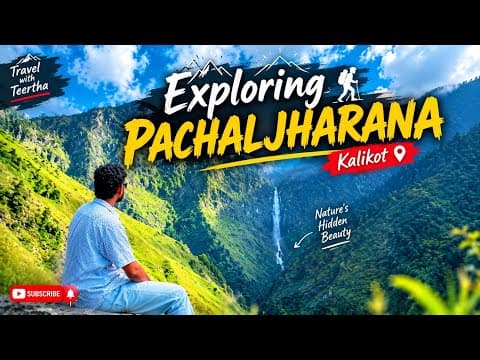
Exploring the heights and canyon amphitheater of Pachal Waterfall, Kalikot (Video: Travel with Teertha)
Cascading down a colossal amphitheater of vertical red limestone cliffs in northern Kalikot, Pachal Waterfall (पचाल झरना) is officially recognized as one of the tallest waterfalls in Nepal and South Asia, with an officially measured vertical plunge of 381 meters. Selected by the Government of Nepal as one of the country's Top 100 Flagship Destinations, this awe-inspiring natural wonder pours continuous glacial runoff from the high alpine passes of northern Kalikot into the Karnali river basin. The thundering cascade generates perpetual rainbow mists and cool mountain breezes that envelope the surrounding pine forests and terraced hamlet of Khardu. Visitors hike along newly constructed stone pathways equipped with safety railings and observation pavilions, with welcoming community homestays in Khardu providing authentic Khas hospitality, organic millet rotis, and local mountain honey.
Cascading down a colossal amphitheater of vertical red limestone cliffs in northern Kalikot, Pachal Waterfall (पचाल झरना) is officially recognized as one of the tallest waterfalls in Nepal and South Asia, with an officially measured vertical plunge of 381 meters. Selected by the Government of Nepal as one of the country's Top 100 Flagship Destinations, this awe-inspiring natural wonder pours continuous glacial runoff from the high alpine passes of northern Kalikot into the Karnali river basin. The thundering cascade generates perpetual rainbow mists and cool mountain breezes that envelope the surrounding pine forests and terraced hamlet of Khardu. Visitors hike along newly constructed stone pathways equipped with safety railings and observation pavilions, with welcoming community homestays in Khardu providing authentic Khas hospitality, organic millet rotis, and local mountain honey.
1 available
1 available
YouTube
Exploring the heights and canyon amphitheater of Pachal Waterfall, Kalikot (Video: Travel with Teertha)
Discover More

Perched dramatically on a commanding mountain promontory high above the deep gorges of the Karnali and Tila rivers, the Khandachakra Manma Historic Ridge (खाँडाचक्र मान्मा ऐतिहासिक गढी तथा पञ्चदेवल) serves as the cultural, historical, and geographic heart of Kalikot. This strategic ridge preserves the ancient stone fortifications of Manma Kot and Purna Kot, alongside the Department of Archaeology-cataloged Manma Panchadewal—a cluster of medieval Khas-Malla stone shikhara-style spire shrines exhibiting master dry-masonry craftsmanship from the Katyuri kingdom era. Towering above the settlement is the sacred peak of Chuli Malika, offering sweeping 360-degree panoramic vistas of the winding Karnali Highway and distant snow-capped Himalayan summits. Walking through this historic ridge offers travelers an authentic immersion into Western Nepal's ancient kingdom roots, traditional stone-and-timber architecture, and dramatic mountain geography.

Perched dramatically on an expansive high-altitude natural mountain plateau above the southwestern Karnali River gorge, the Kotwada Citadel & Suntharali High Plateau (कोटवाडा कोट तथा सुन्थराली उच्च फाँट) in Naraharinath Rural Municipality is one of Kalikot's most picturesque and historic vantage points. The ridge was originally fortified by ancient Baise chieftains to guard strategic mountain passes connecting the Karnali basin with the Ramaroshan highlands of neighboring Achham. Today, this high tableland is home to the scenic Suntharali STOL Airport—the sole civil aviation airstrip in Kalikot—and acts as the premier staging point for the scenic wilderness trek connecting Kalikot to the 12 lakes and 18 meadows of Ramaroshan. Offering sweeping views of rugged canyons, cloud-filled valleys, and alpine ridges, Kotwada blends historic military heritage with high-altitude eco-trekking adventure.

Nestled on an expansive agricultural and historical shelf overlooking the Karnali canyon, Raskot (रास्कोट प्राचीन दरबार तथा कोट क्षेत्र) was the ancestral royal citadel and sovereign seat of the medieval Raskoti kings—one of the foundational principalities of the Baise Rajya confederacy. The citadel complex preserves ancient palace foundations, defensive stone ramparts, stone-paved courtyards, and centuries-old royal spring fountains (Naula) built during the golden age of western Khas rule. Raskot's higher ridges cradle the sacred Deura Malika shrine and subalpine meadows, which serve as the northern spiritual staging route for pilgrims bound for Badimalika. Retaining tightly clustered Khas vernacular settlements with intricately carved wooden pillars and slate roofs, Raskot provides an extraordinary journey into medieval Himalayan statehood, folklore, and rural living heritage.

Hidden among the lush green hills of Panchthar, Battise Waterfall is a breathtaking natural attraction known for its crystal-clear cascading waters and tranquil surroundings. The waterfall tumbles gracefully through rocky cliffs, creating a refreshing escape for visitors seeking peace and natural beauty. Surrounded by dense forests and scenic landscapes, it is an ideal destination for photography, picnics, and short nature walks. During the monsoon season, the waterfall becomes even more spectacular as the increased water flow creates a powerful and mesmerizing sight. The journey to Battise Waterfall is equally rewarding, offering beautiful countryside views and a chance to experience the warm hospitality of local communities. Its calm atmosphere and unspoiled environment make it a perfect getaway for families and nature enthusiasts alike. Whether you're exploring Panchthar or searching for a hidden gem, Battise Waterfall promises a refreshing and memorable experience.

Chamje Waterfall, plunging powerfully down sheer granite cliffs at an elevation of 1,430 metres in Marsyangdi Rural Municipality Ward 4, is one of the most dramatic and awe-inspiring natural landmarks along the classic Annapurna Circuit trekking route in northern Lamjung. Situated directly across the Marshyangdi river gorge from the stone lodge settlement of Chamje, the waterfall thunders hundreds of vertical feet down a narrow vertical rock cleft, generating billowing clouds of cool mist that drift across the canyon. The waterfall is fed by perennial high-altitude glacial snowfields and pristine alpine streams descending from the eastern ridges of Lamjung Himal. As the torrent crashes over successive rock benches into a turbulent plunge pool at the gorge floor, it creates a sensational natural spectacle that captivates every traveler ascending the canyon. Geographically, Chamje Waterfall marks the dramatic natural gateway where the topography transitions from the green, terraced subtropical valleys of lower Lamjung into the steep, vertical-walled alpine gorges that lead toward Manang District. Trekkers cross dramatic steel suspension bridges slung high above the churning Marshyangdi river, taking rest at roadside viewpoints and tea stalls to photograph the tumbling waters set against soaring Himalayan cliffs.

Davis Falls, locally known as Patale Chhango (The Nether Waterfall), is an extraordinary geological wonder located in Chhorepatan, southwest of Pokhara. Fed by the outflow of Phewa Lake through the Pardi Khola river, the waterfall crashes with roaring force into an immense subterranean cavern and completely disappears underground into an intricate limestone canyon. The underground torrent travels through subterranean tunnels for approximately 500 metres before re-emerging through the cave passages of Gupteshwor Mahadev across the road. The site gets its western moniker from an unfortunate 1961 incident involving a Swiss traveler named Davy, after which safety railings and tourist infrastructure were established around the viewing perimeter. The waterfall is at its most spectacular during and immediately following the summer monsoon (July to October), when swollen, sediment-rich waters plunge with thunderous reverberation into the depths. Well-maintained landscaped gardens, wishing ponds, and traditional cultural display zones surround the natural gorge.