Silgadhi Historic Bazaar
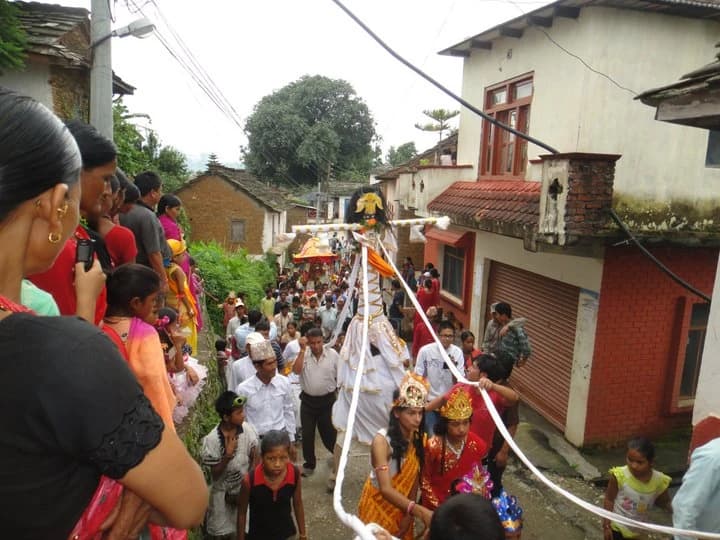
Silgadhi Historic Bazaar is a 250-year-old heritage townscape situated on a high ridge overlooking the Seti River valley in Dipayal Silgadhi Municipality-6, Doti. Founded during the late 18th century by Newar merchant families migrating from Bhaktapur and Patan following the Gorkhali unification, Silgadhi served as the preeminent commercial and administrative entrepot connecting the trans-Himalayan trade trails of Far-Western Nepal with the Indian plains. The town is recognized for its authentic stone-paved alleys, carved wooden Newari balconies, historic stone stepwells (naula), and the Rana-era Rani Pauwa public rest-house, documented by the Department of Archaeology under monuments NP-DO-04, NP-DO-06, and NP-DO-17. Uniquely in Sudurpashchim, Silgadhi preserves an authentic multi-day Gai Jatra festival, Tayamacha dances, and Lakhey masked performances, providing a rare living Newari cultural enclave deep in Khas-Doteli country.
Overview
Silgadhi Historic Bazaar is a 250-year-old heritage townscape situated on a high ridge overlooking the Seti River valley in Dipayal Silgadhi Municipality-6, Doti. Founded during the late 18th century by Newar merchant families migrating from Bhaktapur and Patan following the Gorkhali unification, Silgadhi served as the preeminent commercial and administrative entrepot connecting the trans-Himalayan trade trails of Far-Western Nepal with the Indian plains. The town is recognized for its authentic stone-paved alleys, carved wooden Newari balconies, historic stone stepwells (naula), and the Rana-era Rani Pauwa public rest-house, documented by the Department of Archaeology under monuments NP-DO-04, NP-DO-06, and NP-DO-17. Uniquely in Sudurpashchim, Silgadhi preserves an authentic multi-day Gai Jatra festival, Tayamacha dances, and Lakhey masked performances, providing a rare living Newari cultural enclave deep in Khas-Doteli country.
Photos
1 available
Discover More
Nearby Destinations in Doti & Region

Chhatiwan Lake
Chhatiwan Lake (छतिवन ताल) is an expansive natural freshwater hill lake situated in Jorayal Rural Municipality-2 in southern Doti District. Located approximately 5 kilometers north of Budar Bazaar along the Dhangadhi–Dipayal Highway, the lake lies cradled amidst subtropical Sal and pine hills and terraced agricultural basins at an altitude of approximately 1,380 meters. Local folklore and the Mahabharata tradition associate the valley with Bhima and the mythological duel with king Jarasandha, which local oral history links to the naming of Jorayal. The local government has preserved the natural wetland ecosystem while establishing peaceful boating facilities, nature walking paths, and community eco-park spaces, establishing Chhatiwan Lake as a prime recreational and eco-tourism getaway in the lower hills of Doti.

Shaileshwori Temple
Shaileshwori Temple is the foremost Hindu pilgrimage sanctuary of Sudurpashchim Province, nestled in Silgadhi, the historic headquarters of Doti District. Revered as one of the sacred Nine Bhagwati (Nau Bhagwati) temples of the Far-Western region, the shrine honors Goddess Shaileshwori in the unified Ardhanarishwor form of Shiva and Parvati. According to regional mythology recounted in the Himavatkhanda, Shiva and Parvati resided in divine romance in these hills after their celestial marriage. The temple complex features a pagoda-style central sanctum enclosed by shrines dedicated to Bhairav, Ganesha, Masta, and Shiva, cataloged under Department of Archaeology monument code NP-DO-05. Each year during Kartik Purnima, tens of thousands of devotees assemble for the vibrant Shaileshwori Mela, making it a cornerstone of Far-Western religious culture.

Ajayamerukot Palace Complex
Ajayamerukot is a monumental medieval archaeological citadel and palace complex established in the 13th to 14th century CE as the royal winter capital of the Katyuri and Doti Rainka Kings. Perched defensively atop an isolated mountain spur in Ward 2 of Ajaymeru Rural Municipality at an altitude of 1,313 metres, the site is bordered on three sides by sheer ravines carved by the Chamdola and Baunera streams. The extensive archaeological precinct preserves the foundation platforms of a multi-tiered stone royal palace, expansive paved courtyards, an assembly hall (Baithak), carved Shikhara-style stone dewals, and defensive ramparts. An exceptional architectural marvel of the site is the subterranean Rani Naula (रानी नाउला), an intricately dressed stone step-well featuring arched corridors and classical Katyuri decorative friezes. Recognized as an official Department of Archaeology monument under ID NP-DD-04 and nominated on Nepal's UNESCO World Heritage Tentative List, Ajayamerukot stands as one of the most significant medieval monarchical complexes in the Himalayas.

Alapeshwar Cave (Alpeswor Gupha)
Alapeshwar Cave (locally known as Alpeswor Gupha or Alapu Cave), nestled within the forested hills of Kusma Municipality Ward 7 near Gyadichaur and the Silmi forest corridor, is an extraordinary natural speleological cave network in Parbat District. Discovered in recent decades by local community members, the cave extends several hundred metres into subterranean limestone bedrock, offering an intriguing subterranean exploration destination for eco-tourists and adventure travelers. The interior of Alapeshwar Cave features multiple natural limestone chambers linked by winding rock corridors. Over tens of thousands of years, mineral-rich seepage water has sculpted spectacular calcite formations, including delicate stalactites hanging from cavern ceilings, massive stalagmites rising from the floor, flowstone curtains, and crystalline rock terraces. In several chambers, clear subterranean spring water flows over the smooth limestone floor, creating natural underground wading pools and tranquil echo chambers. Local development committees have installed solar-powered illumination along the main walking galleries, safe metal ladders, and protective handrails to facilitate visitor access without disturbing the delicate cave ecology and resident microbat colonies. Unlike heavily visited commercial caves, Alapeshwar retains a raw, uncommercialized subterranean ambiance that rewards curious travelers exploring the diverse canyon landscape of Kushma.

Amargadhi Fort
Amargadhi Fort is a monumental late 18th-century stone military fortification perched at an elevation of 1,901 metres along the crest of the Mahabharat range in Khalanga, Dadeldhura. Constructed in 1790 CE (1847 BS) by Gorkhali Commander Bada Kaji Amar Singh Thapa following the unification of the Far-Western hill principalities, the citadel commanded vital strategic mountain trade and troop routes between Doti, Kumaon, and the Mahakali basin. Enclosed by massive stone bastion ramparts punctuated with defensive cannon embrasures, the inner fortress encompasses twenty-two subterranean vaulted chambers that served as troop barracks and munitions depots, a central Kotghar armory, and a shrine dedicated to Ugra Bhairav. Cataloged under Department of Archaeology monument identification NP-DD-08, the citadel offers sweeping panoramic vistas across the terraced valleys and surrounding pine-clad ridges.

Argha Bhagwati Temple & Durbar
Argha Bhagwati Temple and Durbar (अर्घा भगवती मन्दिर तथा ऐतिहासिक अर्घा दरबार), majestically crowning the prominent Arghakot hilltop ridge at an elevation of 1,720 meters in Sandhikharka Municipality Ward 9, is the historic royal citadel and military fortress of the ancient Argha Kingdom—one of the influential Chaubisi principalities from which Arghakhanchi District derives half of its name. Established during the medieval period prior to Nepal's territorial unification, Argha Durbar functioned as an impregnable hill garrison commanding panoramic surveillance over the surrounding valleys. The site contains historic stone fortifications, the royal armory (Kot Ghar) preserving antique weapons, curved Khukuris, battle axes, and ceremonial bronze cannons from the 16th to 18th centuries, and the revered temple dedicated to Goddess Argha Bhagwati. The temple is renowned across western Nepal for its vibrant, centuries-old Dashain celebrations, particularly during Maha Navami and Vijaya Dashami, when traditional sword dances (Khadga Jatra), sacred animal sacrifices, and state military drum processions are conducted in accordance with ancient royal decrees. From the fort ramparts, visitors enjoy commanding vistas stretching across the verdant Sandhikharka river valley to the south and the snowy peaks of Dhaulagiri and Annapurna to the north.