YouTube
Open YouTube
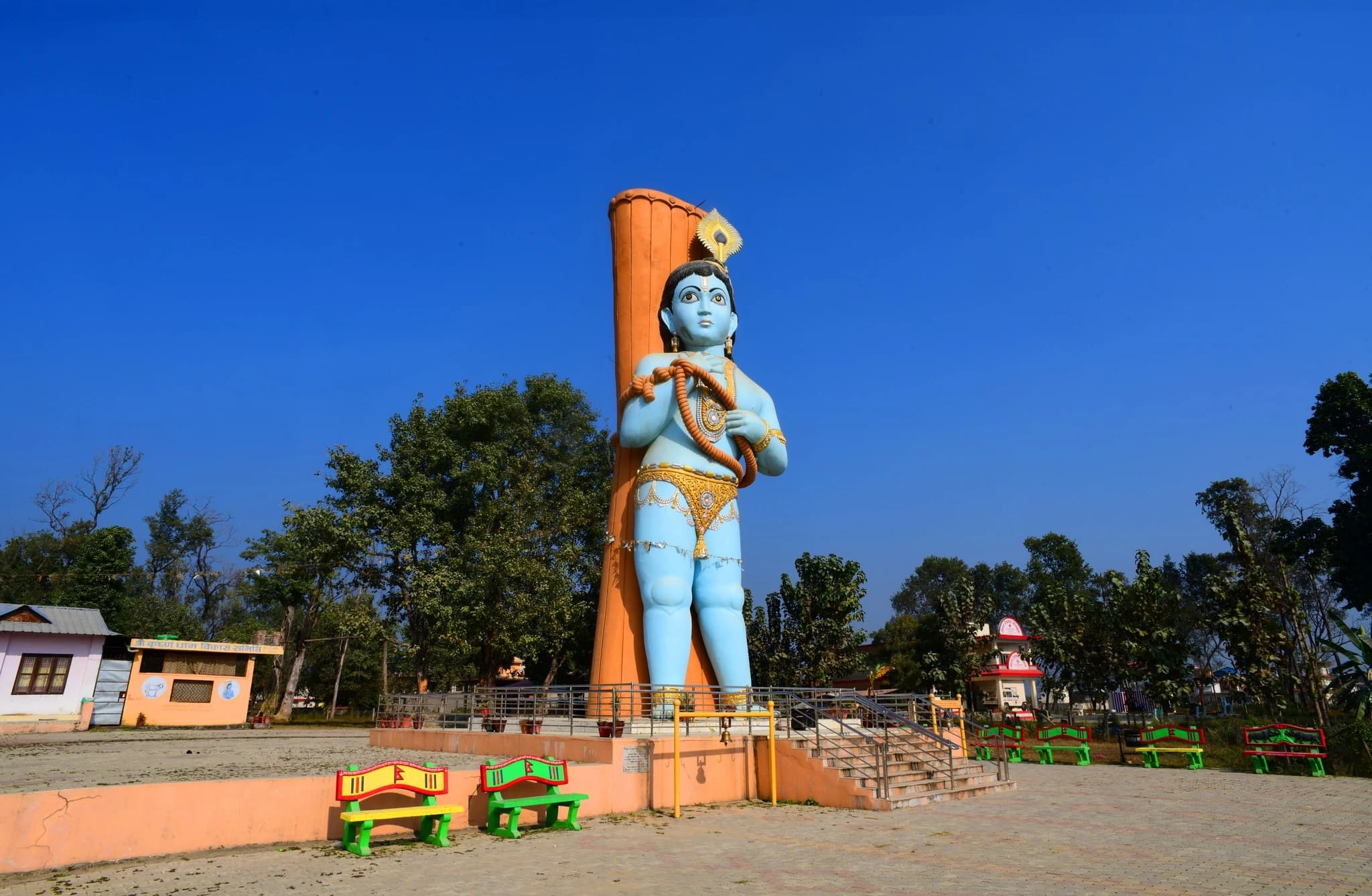
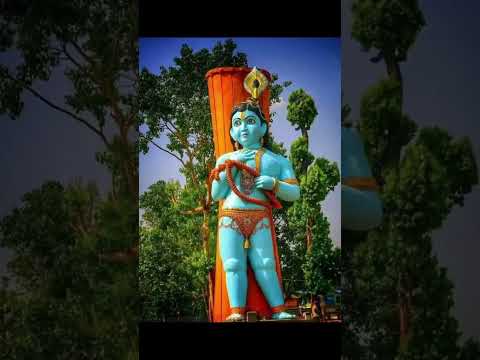
Krishna Dham (कृष्णधाम, सुनवल), situated in Ramwapur of Sunwal Municipality Ward 4 in Nawalparasi West District, is an expansive spiritual sanctuary and modern cultural landmark situated just off the East-West Highway. Developed across two bighas of landscaped grounds by the Sunwal community and local municipality, the dham is celebrated across Nepal for housing a monumental 71-foot-tall standing statue of Lord Krishna—revered as the tallest statue of Lord Krishna in his childhood Damodar form in the world. Unlike conventional depictions of Krishna holding a flute, the monumental Damodar statue masterfully portrays child Krishna at two and a half years old, lovingly tied with a rope (Damodara) by Mother Yashoda around his waist, with open toddler hands outstretched in playful benevolence. The artistic icon stands as a powerful symbol of divine innocence, maternal love, and Vedic devotion. Surrounding the towering centerpiece, the complex integrates landscaped gardens, paved circumambulation avenues, a dedicated Shiva shrine, and the sacred Damodar Kund water pool. Easily accessible to travelers traversing the East-West Highway between Butwal and Narayangarh, Krishna Dham functions as a major spiritual and recreational stopover. It hosts grand celebrations during Krishna Janmashtami, attracting thousands of pilgrims and tourists who come to marvel at the towering icon, participate in devotional bhajans, and enjoy the tranquil park atmosphere.
Krishna Dham (कृष्णधाम, सुनवल), situated in Ramwapur of Sunwal Municipality Ward 4 in Nawalparasi West District, is an expansive spiritual sanctuary and modern cultural landmark situated just off the East-West Highway. Developed across two bighas of landscaped grounds by the Sunwal community and local municipality, the dham is celebrated across Nepal for housing a monumental 71-foot-tall standing statue of Lord Krishna—revered as the tallest statue of Lord Krishna in his childhood Damodar form in the world. Unlike conventional depictions of Krishna holding a flute, the monumental Damodar statue masterfully portrays child Krishna at two and a half years old, lovingly tied with a rope (Damodara) by Mother Yashoda around his waist, with open toddler hands outstretched in playful benevolence. The artistic icon stands as a powerful symbol of divine innocence, maternal love, and Vedic devotion. Surrounding the towering centerpiece, the complex integrates landscaped gardens, paved circumambulation avenues, a dedicated Shiva shrine, and the sacred Damodar Kund water pool. Easily accessible to travelers traversing the East-West Highway between Butwal and Narayangarh, Krishna Dham functions as a major spiritual and recreational stopover. It hosts grand celebrations during Krishna Janmashtami, attracting thousands of pilgrims and tourists who come to marvel at the towering icon, participate in devotional bhajans, and enjoy the tranquil park atmosphere.
1 available
1 available
YouTube
Open YouTube
Discover More

Palhi Bhagwati Temple (पाल्ही भगवती मन्दिर / पाल्हीकोट कालिका), located in Palhinandan Rural Municipality Ward 4 approximately eight kilometers south of Parasi along the Parasi-Maheshpur highway, is the foremost historic Shakti Peeth pilgrimage sanctuary in southern Nawalparasi West. The temple holds profound regional historical status as the ancient spiritual landmark from which the surrounding rural municipality 'Palhinandan' officially derives its name. According to regional chronicles and archaeological documentation, the temple was founded during the medieval reign of the Sen dynasty of Palpa within the fortified royal enclave known as Palhi Kot. Inside the artistic pagoda-style sanctum resides a rare stone icon of Goddess Kali sculpted in the distinctive Sen sculptural idiom, depicting the peaceful yet supreme sovereign form of the goddess holding a ceremonial sword. The sacred compound spans approximately 1.5 bighas and features an ancient ceremonial square, monumental stone lion statues, hanging bronze temple bells, a sacred tank (pokhari), and an adjoining Chamunda Devi shrine in nearby Devgaon. Historically endowed with royal Guthi trusts dating back to BS 1900, Palhi Bhagwati is revered as a wish-fulfilling mother deity (Manokamana). During the great Hindu festivals of Bijaya Dashami, Chaite Dashain, Maghe Dashain, and Ram Navami, tens of thousands of devotees from across the Terai and bordering districts of northern Uttar Pradesh, India, congregate here to offer prayers, perform life-cycle ceremonies, and celebrate vibrant cultural melas.

Ramgram Stupa (रामग्राम स्तूप / Ramagrama Relic Stupa), situated in Ujaini village of Ramgram Municipality Ward 7 approximately four kilometers south of Parasi in Nawalparasi West District, is one of the supreme archaeological treasures of global Buddhism. Inscribed on Nepal's UNESCO World Heritage Tentative List (Ref: 847), Ramgram Stupa is universally celebrated as the ONLY unexcavated, undisturbed, and intact original relic stupa containing the bodily relics (sarira) of Gautama Buddha in the entire world. According to the Mahaparinibbana Sutta, following the Buddha's passing and cremation at Kushinagar in 483 BCE, his physical relics were divided into eight equal portions among eight ancient kingdoms. One portion was awarded to the noble Koliya royal dynasty of Ramagrama, who enshrined the relics beneath a monumental burnt-brick and earthen stupa situated on the banks of the Jharahi River. In the 3rd century BCE, Emperor Ashoka opened seven of the eight original stupas across northern India to redistribute the holy relics into 84,000 commemorative shrines. However, when Ashoka journeyed to Ramagrama, the local serpent king (Nagaraja) and wild forest elephants worshipping the mound pleaded with him not to disturb the sacred site. Deeply humbled by their spiritual devotion, the Mauryan Emperor withdrew without unsealing the mound, leaving its ancient sanctity intact. Today, Ramgram Stupa presents an extraordinarily tranquil sight: a majestic 7-meter-high, 23.5-meter-diameter green earthen mound peacefully embraced by the intertwined roots of an ancient banyan and pipal tree. Geophysical surveys conducted by UNESCO and the Department of Archaeology confirmed an undisturbed multi-tiered brick structure and monastic complex lying quietly beneath the soil. Surrounded by quiet farmland and watercourses, Ramgram offers pilgrims a singularly profound and authentic spiritual connection to the historical Buddha.

Ajayamerukot is a monumental medieval archaeological citadel and palace complex established in the 13th to 14th century CE as the royal winter capital of the Katyuri and Doti Rainka Kings. Perched defensively atop an isolated mountain spur in Ward 2 of Ajaymeru Rural Municipality at an altitude of 1,313 metres, the site is bordered on three sides by sheer ravines carved by the Chamdola and Baunera streams. The extensive archaeological precinct preserves the foundation platforms of a multi-tiered stone royal palace, expansive paved courtyards, an assembly hall (Baithak), carved Shikhara-style stone dewals, and defensive ramparts. An exceptional architectural marvel of the site is the subterranean Rani Naula (रानी नाउला), an intricately dressed stone step-well featuring arched corridors and classical Katyuri decorative friezes. Recognized as an official Department of Archaeology monument under ID NP-DD-04 and nominated on Nepal's UNESCO World Heritage Tentative List, Ajayamerukot stands as one of the most significant medieval monarchical complexes in the Himalayas.

Alapeshwar Cave (locally known as Alpeswor Gupha or Alapu Cave), nestled within the forested hills of Kusma Municipality Ward 7 near Gyadichaur and the Silmi forest corridor, is an extraordinary natural speleological cave network in Parbat District. Discovered in recent decades by local community members, the cave extends several hundred metres into subterranean limestone bedrock, offering an intriguing subterranean exploration destination for eco-tourists and adventure travelers. The interior of Alapeshwar Cave features multiple natural limestone chambers linked by winding rock corridors. Over tens of thousands of years, mineral-rich seepage water has sculpted spectacular calcite formations, including delicate stalactites hanging from cavern ceilings, massive stalagmites rising from the floor, flowstone curtains, and crystalline rock terraces. In several chambers, clear subterranean spring water flows over the smooth limestone floor, creating natural underground wading pools and tranquil echo chambers. Local development committees have installed solar-powered illumination along the main walking galleries, safe metal ladders, and protective handrails to facilitate visitor access without disturbing the delicate cave ecology and resident microbat colonies. Unlike heavily visited commercial caves, Alapeshwar retains a raw, uncommercialized subterranean ambiance that rewards curious travelers exploring the diverse canyon landscape of Kushma.

Amargadhi Fort is a monumental late 18th-century stone military fortification perched at an elevation of 1,901 metres along the crest of the Mahabharat range in Khalanga, Dadeldhura. Constructed in 1790 CE (1847 BS) by Gorkhali Commander Bada Kaji Amar Singh Thapa following the unification of the Far-Western hill principalities, the citadel commanded vital strategic mountain trade and troop routes between Doti, Kumaon, and the Mahakali basin. Enclosed by massive stone bastion ramparts punctuated with defensive cannon embrasures, the inner fortress encompasses twenty-two subterranean vaulted chambers that served as troop barracks and munitions depots, a central Kotghar armory, and a shrine dedicated to Ugra Bhairav. Cataloged under Department of Archaeology monument identification NP-DD-08, the citadel offers sweeping panoramic vistas across the terraced valleys and surrounding pine-clad ridges.

Argha Bhagwati Temple and Durbar (अर्घा भगवती मन्दिर तथा ऐतिहासिक अर्घा दरबार), majestically crowning the prominent Arghakot hilltop ridge at an elevation of 1,720 meters in Sandhikharka Municipality Ward 9, is the historic royal citadel and military fortress of the ancient Argha Kingdom—one of the influential Chaubisi principalities from which Arghakhanchi District derives half of its name. Established during the medieval period prior to Nepal's territorial unification, Argha Durbar functioned as an impregnable hill garrison commanding panoramic surveillance over the surrounding valleys. The site contains historic stone fortifications, the royal armory (Kot Ghar) preserving antique weapons, curved Khukuris, battle axes, and ceremonial bronze cannons from the 16th to 18th centuries, and the revered temple dedicated to Goddess Argha Bhagwati. The temple is renowned across western Nepal for its vibrant, centuries-old Dashain celebrations, particularly during Maha Navami and Vijaya Dashami, when traditional sword dances (Khadga Jatra), sacred animal sacrifices, and state military drum processions are conducted in accordance with ancient royal decrees. From the fort ramparts, visitors enjoy commanding vistas stretching across the verdant Sandhikharka river valley to the south and the snowy peaks of Dhaulagiri and Annapurna to the north.