YouTube
Open YouTube
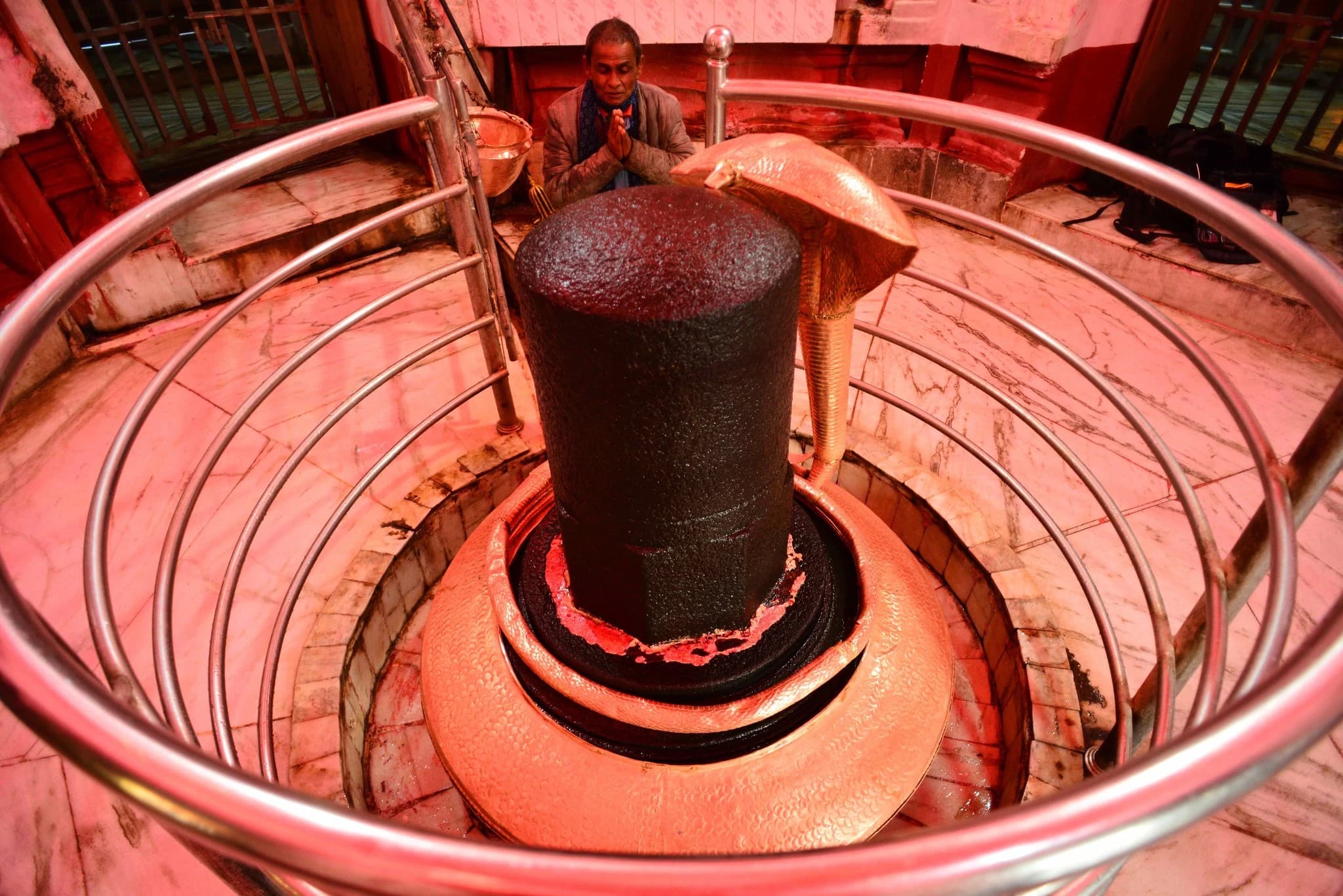
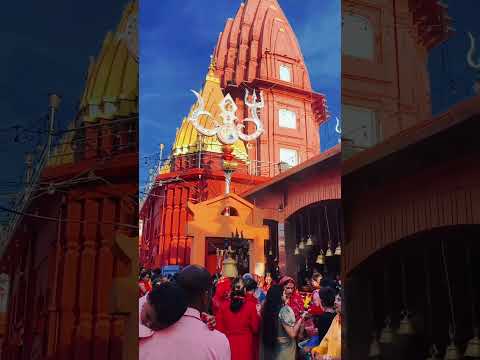
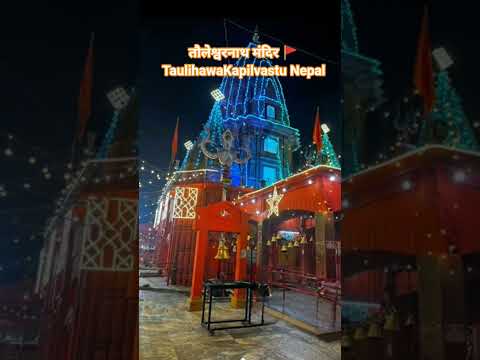
Tauleshwar Nath Temple (तौलेश्वरनाथ महादेव मन्दिर / ताम्रेश्वर महादेव), prominently situated at the core of Taulihawa Bazaar in Kapilvastu Municipality-1, is the oldest and most celebrated Hindu Shiva temple in Kapilvastu District. It holds immense cultural and geographic significance as the sacred shrine from which the district headquarters city of 'Taulihawa' derives its name (Tauleshwar -> Taulihawa). According to deeply revered local traditions, the consecrated black stone Shiva Lingam—standing approximately three feet tall and encircled by a sacred copper serpent—dates back to the era of the Shakya Republic, when King Suddhodana and early Shakya royalty worshipped Lord Shiva for divine protection and civic prosperity. Historically reconstructed in wood in 1872 BS and subsequently built as a brick temple in 1930 BS by the Goswami Puri monastic lineage, the shrine has undergone extensive royal and community restorations across the 20th century. The temple is constructed in an ornate Shikhara architectural style with four entrance portals, featuring a western main door adorned with embossed brass artwork, sacred bell pavilions, and a sacred water tank. During Maha Shivaratri and the holy Hindu month of Shrawan, tens of thousands of pilgrims from across Lumbini Province and neighboring districts of India gather here to participate in colorful fairs, chant Vedic hymns, and offer holy water to the ancient lingam.
Tauleshwar Nath Temple (तौलेश्वरनाथ महादेव मन्दिर / ताम्रेश्वर महादेव), prominently situated at the core of Taulihawa Bazaar in Kapilvastu Municipality-1, is the oldest and most celebrated Hindu Shiva temple in Kapilvastu District. It holds immense cultural and geographic significance as the sacred shrine from which the district headquarters city of 'Taulihawa' derives its name (Tauleshwar -> Taulihawa). According to deeply revered local traditions, the consecrated black stone Shiva Lingam—standing approximately three feet tall and encircled by a sacred copper serpent—dates back to the era of the Shakya Republic, when King Suddhodana and early Shakya royalty worshipped Lord Shiva for divine protection and civic prosperity. Historically reconstructed in wood in 1872 BS and subsequently built as a brick temple in 1930 BS by the Goswami Puri monastic lineage, the shrine has undergone extensive royal and community restorations across the 20th century. The temple is constructed in an ornate Shikhara architectural style with four entrance portals, featuring a western main door adorned with embossed brass artwork, sacred bell pavilions, and a sacred water tank. During Maha Shivaratri and the holy Hindu month of Shrawan, tens of thousands of pilgrims from across Lumbini Province and neighboring districts of India gather here to participate in colorful fairs, chant Vedic hymns, and offer holy water to the ancient lingam.
1 available
2 available
YouTube
Open YouTube
YouTube
Open YouTube
Discover More

Gotihawa (गोतिहवा), located approximately four kilometers southwest of Taulihawa in Kapilvastu District, is an ancient sacred pilgrimage site celebrated as the birthplace and Parinirvana site of Krakucchanda (Kakusandha) Buddha, the first mortal Buddha of the current Bhadrakalpa (auspicious aeon). In 249 BCE, the Mauryan Emperor Ashoka undertook an imperial pilgrimage to this holy spot to venerate Krakucchanda Buddha, erecting a monolithic stone pillar and enlarging an ancient commemorative brick stupa. Today, the lower monolithic shaft of Emperor Ashoka's sandstone pillar remains preserved in situ upon an ancient masonry platform, standing approximately 3.25 meters high with a diameter of about 80 centimeters inside a modern protective pavilion. Archaeological excavations jointly conducted by the Nepalese Department of Archaeology and Italian archaeologists in 1993 uncovered evidence of continuous human activity extending from the 10th to 9th centuries BCE through the Kushan period. A massive hemispherical brick stupa with a diameter of 21.5 meters and a circumambulatory path (pradakshinapatha) was revealed adjacent to the pillar. Both early Chinese pilgrim monks, Faxian (early 5th century CE) and Xuanzang (7th century CE), recorded visiting Gotihawa, describing the Ashoka pillar crowned with a lion capital and recounting the serene devotion surrounding the birthplace of Krakucchanda Buddha. Located beside an ancient sacred village pond, Gotihawa offers scholars and pilgrims an extraordinary, tangible connection to the deep antiquity of the Buddhist world.

Jagdishpur Reservoir (जगदीशपुर जलाशय / जाखिरा ताल), located in Banganga Municipality-9 of Kapilvastu District, is the largest man-made reservoir in Nepal and one of the most critical wetland sanctuaries in South Asia. Designated as a Ramsar Site (Wetland of International Importance No. 1313) in August 2003, the reservoir covers a surface area of 225 hectares (with a core open-water body of 157 hectares), surrounded by a perimeter earthen dyke and agricultural marshlands fed by the Banganga River. Constructed during the 1970s for agricultural irrigation on the site of a pre-existing natural lake called Jakhira Tal, the reservoir has evolved into Nepal's foremost wintering haven for migratory waterfowl traveling along the Central Asian Flyway. Ornithological surveys have recorded more than 168 bird species here, and during the peak winter months (November to February), the lake hosts upwards of 20,000 to 25,000 birds simultaneously. The wetland serves as a crucial breeding and roosting stronghold for globally vulnerable species including the Sarus Crane (*Antigone antigone*), Lesser Adjutant Stork, Asian Openbill, Ferruginous Duck, Greater Spotted Eagle, and diverse species of grebes, cormorants, and herons. The reservoir also harbors 42 species of fish, 10 amphibian species, and diverse aquatic flora including water lilies and lotus beds. Equipped with observation watchtowers, walking trails along the dykes, and boat rides, Jagdishpur Reservoir is an unmissable destination for eco-tourists, birdwatchers, and nature photographers.

Kudan (कुदान), also celebrated in Buddhist literature as Nigrodharama (न्यग्रोधाराम / The Banyan Grove Monastery), is an ancient sacred site situated about four and a half kilometers south of Taulihawa Bazaar in Kapilvastu District. It is revered in Buddhist history as the historic grove where Lord Buddha resided during his first emotional return to his hometown of Kapilavastu seven years after attaining supreme enlightenment. According to Buddhist scriptures, it was here at Nigrodharama that the Buddha met his aging father, King Suddhodana, who donated this tranquil banyan park to the monastic order (Sangha). The site witnessed several foundational events in Buddhist history: here, the Buddha's young son, Prince Rahula, was initiated into the monastic order as a novice monk (Samanera); his half-brother Nanda renounced the throne to join the Sangha; 500 noble Shakya youths took monastic vows; and his foster mother, Mahaprajapati Gautami, humbly presented the Buddha with the yellow monastic robe (Kasaya) that she had woven herself. First surveyed by archaeologist P.C. Mukherji in 1899 and excavated by the Department of Archaeology, the site features impressive monumental red-brick structural mounds, an ancient octagonal well base, a decorative structural temple plinth, a lotus pond, and a medieval Shiva lingam placed atop the central mound during subsequent centuries. Surrounded by tranquil rural farmland, Kudan is a deeply moving pilgrimage destination imbued with profound themes of familial reconciliation, monastic origins, and spiritual humility.

Niglihawa (निग्लिहवा), situated approximately seven kilometers northwest of Taulihawa along the banks of the ancient Niglisagar pond in Kapilvastu District, is the sacred birthplace of Kanakamuni (Konagamana) Buddha, the second mortal Buddha of the present Bhadrakalpa. The site is world-famous for preserving broken sections of an imperial Ashoka Pillar bearing an exceptionally clear historic inscription in ancient Brahmi script and Pali language. Discovered in 1895 near the Niglisagar reservoir, the pillar bears a four-line edict inscribed by Emperor Ashoka. The royal inscription explicitly states that in the fourteenth year of his consecration, the Beloved of the Gods (King Ashoka) enlarged the stupa of the Buddha Kanakamuni to double its original size, and in the twentieth year of his coronation, he personally visited the site to offer royal worship and erected this commemorative stone pillar. A subsequent medieval pilgrim inscription recording the visit of King Ripu Malla of the Western Khas Kingdom in 1312 CE is also inscribed on the upper segment. The pillar is preserved in two sections inside a protective covered enclosure near the Niglisagar tank, shaded by ancient trees. Chinese traveler Xuanzang visited Niglihawa in the 7th century CE and documented the presence of the pillar surmounted by a sculpted lion capital. Set in a peaceful rural enclave, Niglihawa stands as undeniable epigraphic and historical testimony to the living lineage of the past Buddhas.

Sagarhawa (सगरहवा), located in Banganga Municipality approximately twelve kilometers north of Taulihawa near the Jagdishpur wetlands, is an ancient archaeological and historical site situated along the forested banks of an expansive rectangular reservoir known locally as Lumba Sagar (लम्बसागर). The lake measures approximately 1,059 feet in length and 225 feet in width, set within tranquil sal woodlands and agricultural expanses. In Buddhist historical traditions and regional folklore, Sagarhawa is recognized as the tragic site of the 'Massacre of the Shakyas' carried out by King Virudhaka of Kosala during the final years of Gautama Buddha's earthly life. Deeply wounded by ancient caste slights from the Shakya nobility, Virudhaka invaded the Shakya republic and slaughtered thousands of Shakya warriors and noblemen along the lake shores. Following the tragedy, surviving kinsmen and Buddhist devotees erected memorial stupas over the relics and ashes of the fallen defenders. Excavations conducted here by archaeologist Dr. Alois Anton Führer in 1897 uncovered the structural foundations of seventeen miniature memorial stupas, alongside uniquely carved decorative bricks depicting lotus motifs, bows, arrows, and ceremonial vessels. Now preserved under the care of the Lumbini Development Trust, Sagarhawa provides a deeply atmospheric, poignant sanctuary where visitors can contemplate both ancient Shakya history and the quiet beauty of rural Kapilvastu.

Tilaurakot (प्राचीन कपिलवस्तु / तिलौराकोट), situated approximately three kilometers north of Taulihawa in Kapilvastu Municipality, is one of the most historically momentous archaeological landscapes in human civilization. Inscribed on Nepal's UNESCO World Heritage Tentative List, this sprawling fortified citadel is widely identified by international archaeologists and historians as the ancient city of Kapilavastu—the capital of the ancient Shakya Republic where King Suddhodana reigned and Prince Siddhartha Gautama (Lord Buddha) spent the first 29 years of his life in royal luxury before embarking on his Great Renunciation (Mahabhiniskramana). The archaeological site encompasses an expansive quadrangular fortified mound enclosed by defensive burnt-brick ramparts, a wide defensive moat, and imposing monumental gateways on the eastern and western flanks. Intensive excavations conducted by the Department of Archaeology in collaboration with Durham University and international teams have uncovered continuous habitation layers dating from the first millennium BCE, revealing an intricately planned royal palace complex, drainage systems, ancient roads, residential structural compounds, and thousands of antiquities including punch-marked coins, terracotta figurines, and Northern Black Polished Ware ceramics. Key features within and adjacent to the fortified citadel include the Central Palace ruins, the revered Samai Mai Temple enshrined under ancient trees inside the compound walls, and the Dhamnihawa Twin Stupas situated just north of the moat, traditionally commemorated as the memorial stupas of King Suddhodana and Queen Maya Devi. Surrounded by peaceful Sal forests and rural agricultural fields, Tilaurakot offers an extraordinary, atmospheric pilgrimage where travelers can walk the authentic paths trodden by Prince Siddhartha during his youth.