YouTube
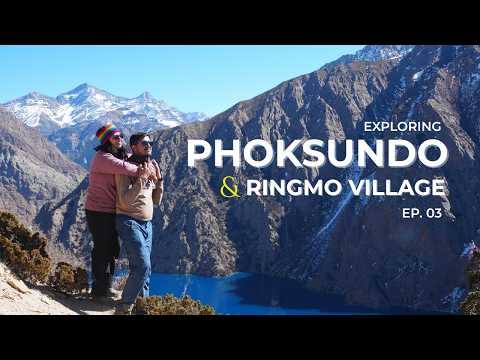
Ringmo Traditional Bön Village Travel Video
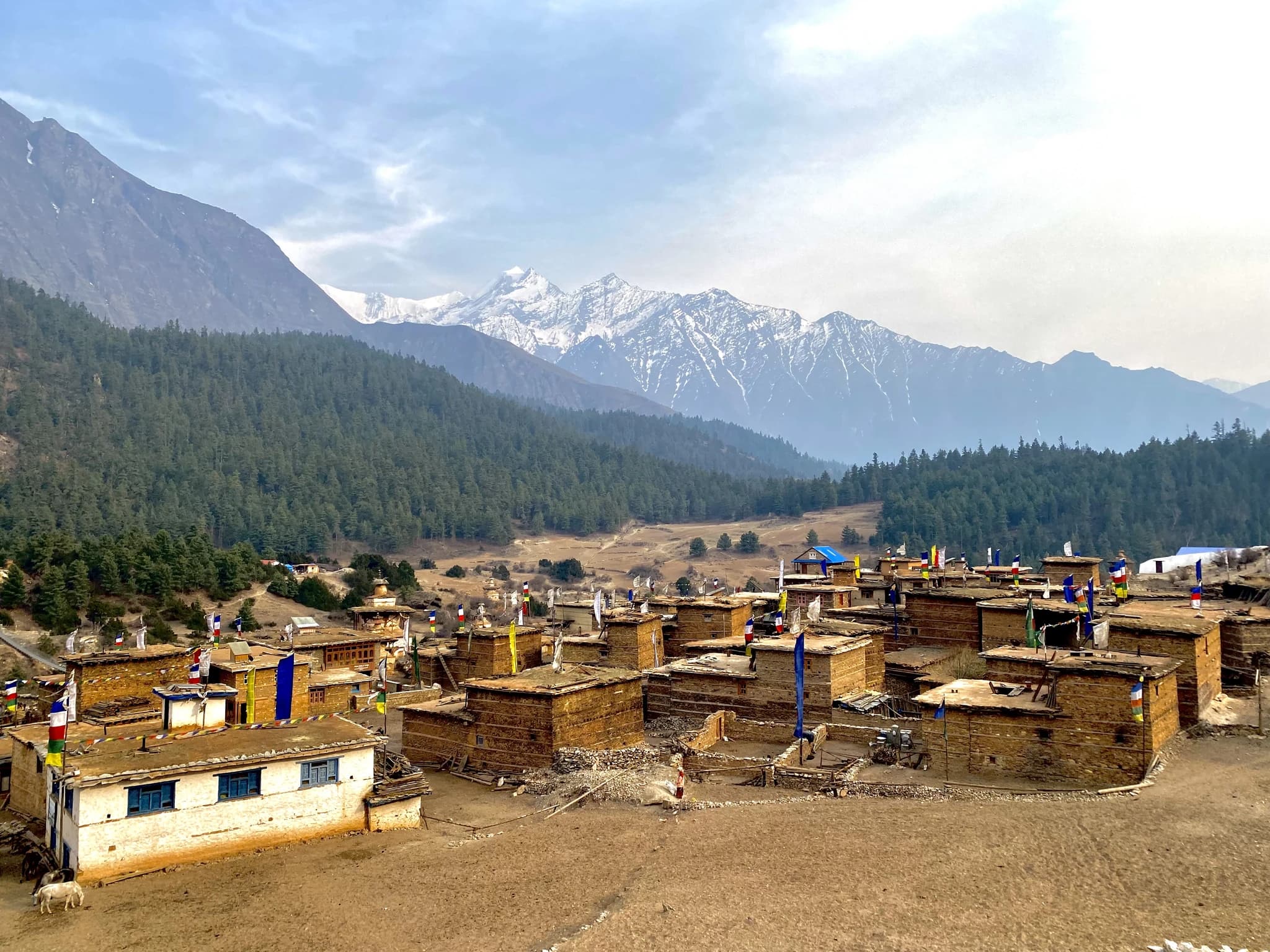
Nestled peacefully upon an ancient glacial moraine terrace at an elevation of approximately 3,640 meters, Ringmo Village (रिङ्मो गाउँ) is an enchanting cultural enclave situated on the immediate southern shore of Shey Phoksundo Lake within Shey Phoksundo National Park. Inhabited by around two hundred residents of the indigenous Dolpo-pa community, Ringmo represents one of the most authentic surviving strongholds of Yungdrung Bön—the ancient spiritual tradition of Tibet that predated the arrival of Buddhism in the trans-Himalayas. The settlement presents an intact vision of traditional mountain architecture, with tightly clustered flat-roofed houses constructed from dry-stacked slate and massive pine beams, surrounded by stone-walled corrals for yaks and mountain sheep. Massive carved Bön mani stone walls line the pathways, uniquely circumambulated in an anti-clockwise direction according to Bön doctrine. High on the rocky cliff above the village perches the 900-year-old Tshowa Gompa (Thasung Tsholing). Serving as the vital community, cultural, and homestay base for all expeditions to the Phoksundo basin, Ringmo preserves an extraordinary harmony between human heritage and alpine wilderness.
Nestled peacefully upon an ancient glacial moraine terrace at an elevation of approximately 3,640 meters, Ringmo Village (रिङ्मो गाउँ) is an enchanting cultural enclave situated on the immediate southern shore of Shey Phoksundo Lake within Shey Phoksundo National Park. Inhabited by around two hundred residents of the indigenous Dolpo-pa community, Ringmo represents one of the most authentic surviving strongholds of Yungdrung Bön—the ancient spiritual tradition of Tibet that predated the arrival of Buddhism in the trans-Himalayas. The settlement presents an intact vision of traditional mountain architecture, with tightly clustered flat-roofed houses constructed from dry-stacked slate and massive pine beams, surrounded by stone-walled corrals for yaks and mountain sheep. Massive carved Bön mani stone walls line the pathways, uniquely circumambulated in an anti-clockwise direction according to Bön doctrine. High on the rocky cliff above the village perches the 900-year-old Tshowa Gompa (Thasung Tsholing). Serving as the vital community, cultural, and homestay base for all expeditions to the Phoksundo basin, Ringmo preserves an extraordinary harmony between human heritage and alpine wilderness.
3 available
1 available
YouTube
Ringmo Traditional Bön Village Travel Video
Discover More

Perched gracefully on a sacred hilltop promontory in Tripurakot at an elevation of approximately 2,100 meters, the Bala Tripura Sundari Temple (श्री बाला त्रिपुरासुन्दरी भगवती मन्दिर) stands as the foremost Hindu Shaktipeeth and spiritual heartland of Lower Dolpa. According to sacred Hindu tradition, this revered shrine dates back to the 11th or 12th century AD (historically commemorated around 1114 BS) and is uniquely consecrated to Goddess Bala Tripura Sundari, worshiped as the divine child manifestation of Goddess Durga. It is widely revered across Nepal as the sole sacred pilgrimage site where devotees venerate the goddess specifically in her infant grace. The temple complex commands a sweeping vantage point above the sacred confluence of three Himalayan rivers—the Bhairavi Ganga, Tamrabarni, and Sundari—which mingle before feeding into the roaring waters of the Thuli Bheri River. Built in the traditional western Himalayan hill pagoda style with interlocking dry-stone masonry, heavy timber lintels, and intricately carved wooden struts, the inner sanctum enshrines statues of five sister goddesses—Barahi, Chamunda, Bhramayani, Indrayani, and Mahakali. Historically associated with great spiritual luminaries including the Shankaracharya of Kanchi Kamakoti and the ascetic sage Khaptad Baba, the shrine draws over 20,000 pilgrims annually, reaching its celebratory zenith during the autumn Navaratri festival.

Perched in solitary, windswept grandeur at an elevation of approximately 4,302 meters (14,114 feet) in eastern Dolpa, Chharka Bhot (छार्का भोट) ranks among the highest permanently inhabited and farmed settlements on the planet. Situated in an austere trans-Himalayan cold desert along the upper Barbung Chu drainage near the border with Mustang and Tibet, this ancient walled settlement serves as the cultural center of Chharka Tangsong Rural Municipality and a historic crossroads on the trans-Himalayan salt caravan trade routes. Chharka is characterized by dense, fortress-like stone houses constructed with massive fieldstones to resist fierce mountain winds and sub-zero winter temperatures. The earthen flat rooftops are piled high with dried scrub fuel and barley stalks, linked by notched wooden log ladders, while multi-colored prayer flags flutter across the village perimeter. The community maintains the ancient Bön and Buddhist traditions of Chharka Gompa (Sula Gompa), herding herds of yaks across alpine pastures and farming short-season hardy Tibetan barley. Situated along the extreme trekking corridor connecting Dolpa with Jomsom in Mustang via the 5,030-meter Chharka La and Jungben La passes, Chharka Bhot represents the quintessential frontier of Himalayan endurance.

Sprawling across a wide, arid glacial basin at an astonishing altitude of approximately 4,080 meters, Dho Tarap (धो तराप) is widely celebrated as one of the highest permanently inhabited human settlements on Earth where seasonal agriculture of barley and mountain potatoes is sustained. Surrounded by towering scree ridges and glaciated massifs, Dho Tarap constitutes the cultural and social heart of the Dolpo-pa people in eastern Dolpa, retaining an unbroken, centuries-old Himalayan way of life intimately tied to yak pastoralism, traditional Tibetan medicine (Amchi), and trans-Himalayan trade. The vernacular architecture of Dho Tarap is a masterclass in high-altitude climate adaptation. Compact two-to-three-story homes are built from chiseled local fieldstone with thick mud-insulated flat roofs stacked neatly with winter firewood, while vibrant Buddhist prayer flags (*lungta*) flutter from timber poles atop every household. The settlement is dotted with monumental ancient chortens and historic monasteries, including the 1,000-year-old Ribo Bumpa Gompa and the Shipchhok Bön Monastery. Serving as the pivotal trekking crossroads connecting Lower Dolpa to the Upper Dolpo circuit via the high passes of Numa La (5,190m) and Baga La (5,070m), Dho Tarap offers travelers an unforgettable immersion into living trans-Himalayan culture.

Plunging in a thunderous roar from a sheer rocky precipice at approximately 3,600 meters elevation, the Phoksundo Waterfall (फोक्सुण्डो झरना), also known as the Suligad Waterfall (सुलिगाड झरना), is widely heralded as one of the tallest and most spectacular natural cataracts in Nepal. With an uninterrupted vertical plunge of approximately 167 meters (548 feet), this immense cascade is formed where the azure crystal waters draining from the southern threshold of Shey Phoksundo Lake breach an ancient seismically formed rockslide barrier and hurtle violently into the narrow canyon of the Suligad River gorge below. Framed by vertical limestone cliffs draped in dense subalpine stands of Himalayan blue pine, birch, and spruce, the waterfall generates a perpetual plume of cool mist that catches the morning sunlight in vibrant rainbows. An official cantilevered wooden observation viewpoint constructed along the trekking trail between Chhepka/Rechi and Ringmo provides an unforgettable panoramic vantage point, allowing visitors to marvel at the immense scale of the cascade against the glaciated peaks of the Kanjiroba range. Venerated as a sacred natural wonder by local Bön and Buddhist communities, Phoksundo Waterfall is an essential highlight along the classic approach to Nepal's deepest lake.

Dramatically situated on terraced mountain bluffs at an altitude of approximately 3,770 to 3,980 meters in the barren Nangkhong Valley, Saldang (साल्दाङ) is the historic administrative and cultural capital of Upper Dolpo. Famous worldwide as the home village of the legendary village elder Thinle Lhondup and the primary filming location of Eric Valli's Academy Award-nominated cinematic masterpiece *Himalaya* (1999, also released as *Caravan*), Saldang is the largest and most populous traditional settlement in northern Dolpa, serving as the administrative headquarters of Shey Phoksundo Rural Municipality. The village sprawls for nearly two kilometers across arid mountain slopes in the trans-Himalayan rain shadow, featuring thick-walled stone dwellings, flat mud roofs, intricately carved prayer chortens, and terraced fields of high-altitude barley irrigated by glacial meltwater. Saldang remains a thriving center for traditional Tibetan herbal medicine (Amchi) and serves as an indispensable waypoint for traditional yak caravans trading salt from Tibet for grain from the southern middle hills. Anchored by the historic Samye Choeling Gompa, Saldang offers an extraordinary window into the resilient spirit of high-altitude Himalayan civilization.

Standing in serene, awe-inspiring seclusion at an altitude of approximately 4,310 meters in the high trans-Himalayan wilderness of Upper Dolpo, Shey Gompa (शे गुम्बा - 'The Crystal Monastery') is universally revered as the spiritual epicenter of the Dolpo region. Founded in the 11th century AD and historically linked to the great Buddhist yogi Druptop Senge Yeshe, the monastery belongs to the Chaiba (Kagyu/Nyingma) lineage of Tibetan Buddhism and was immortalized across the world in Peter Matthiessen's acclaimed National Book Award-winning classic, *The Snow Leopard* (1978), and George Schaller's pioneering wildlife studies. The red-walled monastery compound sits directly beneath the jagged ramparts of the sacred Crystal Mountain, known locally in Tibetan as Shelri (शेलरी) or Ribo Drugta. Embedded with rich veins of natural quartz crystals and marine fossils that glisten under the alpine sun, Shelri is revered by pilgrims as the 'Younger Brother of Mount Kailash.' Devotees undertake the demanding Shelri Kora—a high-altitude circumambulation across scree cols and moraines believed to purify lifetimes of negative karma. Once every twelve years during the Year of the Dragon, thousands of pilgrims converge at Shey Gompa for the legendary Shelri Drugdra Festival, celebrating an ancient legacy of faith and meditation amid the highest peaks of Karnali.