YouTube
रलिङ गुम्बा (Raling Gumba) - ऐतिहासिक ताम्रपत्र तथा हिमाली तीर्थस्थल | Humla Travelogue
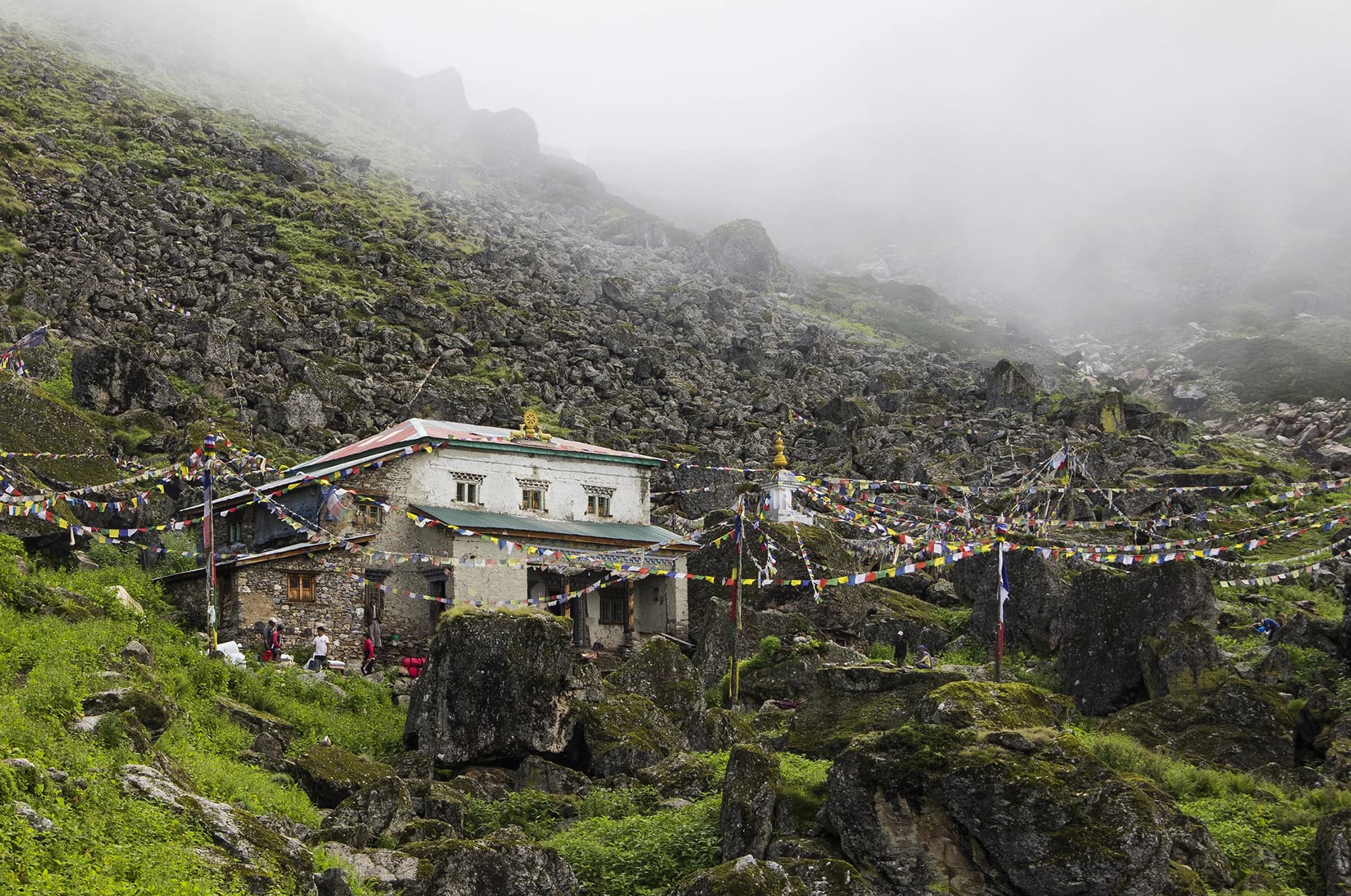
Perched at an elevation of approximately 3,950 to 3,995 meters at the foot of Mount Shelmogang (Crystal Peak), Raling Gompa (रलिङ गुम्बा, Department of Archaeology Code NP-HL-08) stands as the holiest and most revered Buddhist sanctuary of upper Humla. Consecrated to the Nyingma and Drukpa Kagyu lineages, oral history and ancient copper-plate inscriptions (tamrapatra dating to 1213 BS / 1156 AD) attest to its venerable antiquity as a regional spiritual epicenter. According to sacred Himalayan lore, both the tantric master Guru Padmasambhava (Guru Rinpoche) and the revered ascetic poet Jetsun Milarepa meditated within the rugged stone caves embedded into the cliffs surrounding the monastery. The monastery complex features stone chortens, traditional dry-stone and mud-mortar walls, and hand-carved wooden prayer galleries. Raling Gompa is celebrated throughout northwestern Nepal for its annual Saga Dawa festival in May or June, when resident monks perform sacred masked Cham dances before hundreds of pilgrims who circle both the monastery and Mount Shelmogang—regarded locally as the 'Kailash of Humla'—in a rigorous alpine kora pilgrimage.
Perched at an elevation of approximately 3,950 to 3,995 meters at the foot of Mount Shelmogang (Crystal Peak), Raling Gompa (रलिङ गुम्बा, Department of Archaeology Code NP-HL-08) stands as the holiest and most revered Buddhist sanctuary of upper Humla. Consecrated to the Nyingma and Drukpa Kagyu lineages, oral history and ancient copper-plate inscriptions (tamrapatra dating to 1213 BS / 1156 AD) attest to its venerable antiquity as a regional spiritual epicenter. According to sacred Himalayan lore, both the tantric master Guru Padmasambhava (Guru Rinpoche) and the revered ascetic poet Jetsun Milarepa meditated within the rugged stone caves embedded into the cliffs surrounding the monastery. The monastery complex features stone chortens, traditional dry-stone and mud-mortar walls, and hand-carved wooden prayer galleries. Raling Gompa is celebrated throughout northwestern Nepal for its annual Saga Dawa festival in May or June, when resident monks perform sacred masked Cham dances before hundreds of pilgrims who circle both the monastery and Mount Shelmogang—regarded locally as the 'Kailash of Humla'—in a rigorous alpine kora pilgrimage.
2 available
1 available
YouTube
रलिङ गुम्बा (Raling Gumba) - ऐतिहासिक ताम्रपत्र तथा हिमाली तीर्थस्थल | Humla Travelogue
Discover More

Hidden within the remote trans-Himalayan expanse of Limi Valley at an altitude of 3,660 meters, Halji Rinchenling Monastery (हल्जी रिन्छेनलिङ गुम्बा, Department of Archaeology Code NP-HL-01) is recognized by architectural historians and Tibetologists as the oldest continuously functioning monastery in Humla, and one of the best-preserved medieval monastic treasures in the entire Himalayas. Attributed to the legendary 11th-century Buddhist translator Lotsawa Rinchen Zangpo (958–1055 AD), the three-story mud, stone, and cedar-timber sanctuary belongs to the Drikung Kagyu lineage. Inside its dimly lit assembly hall (Dukhang), magnificent life-sized statues of Maitreya (Jampa Buddha), Amitabha, and Avalokiteshvara are preserved alongside nearly thousand-year-old silk thangkas and complete canonical editions of the Tibetan Kangyur and Tengyur. Halji serves as the social and spiritual cornerstone for the fortified village of Halji, preserving centuries of living monastic ritual and timeless Himalayan traditions.

Stretching across the northernmost trans-Himalayan rain shadow of Humla District along the border with Tibet, Limi Valley (लिमी उपत्यका) is one of the most culturally pristine and geographically dramatic wilderness valleys in Nepal. Situated between 3,600 and 3,950 meters, the valley encompasses three historic compact settlements: Til (the westernmost stone fortress village), Halji (the spiritual center housing Rinchenling Gompa), and Jang (the eastern terminal village with ancient wooden bridges and hot springs). Because of its severe geographical isolation, accessible only via formidable alpine passes such as Nyalu La (4,995 m) and Nara La (4,580 m), Limi has preserved an authentic Tibetan pastoral way of life virtually unchanged for centuries. The valley's dramatic desert-like landscape, dotted with willow oases and irrigated barley fields, forms a critical habitat for endangered Himalayan wildlife including snow leopards, Tibetan wolves, blue sheep, and herds of wild yak (drong) and kiang (Tibetan wild ass). For adventurous trekkers, Limi offers an unparalleled immersion into high-altitude serenity and living ancient culture.

Rising to a commanding elevation of 4,210 meters along the southeastern boundary of Humla District bordering Mugu, Mount Chankheli (चङ्खेली हिमाल / चङ्खेली डाँडा) is one of the most culturally celebrated mountain summits in western Nepal. For decades, this distinctive rocky pyramid has held a cherished place in Nepali popular imagination, widely recognized in numismatic tradition as the mountain long believed to be depicted on Nepal's iconic 1-rupee banknote. Mount Chankheli and the adjacent Chankheli Pass (3,571 m) form a vital high-altitude link along the Great Himalaya Trail and the classic trans-Karnali trekking route connecting Rara Lake in Mugu to Simikot in Humla. Trekkers ascending its forested slopes traverse thick stands of blue pine, silver fir, and vibrant rhododendron before emerging onto expansive alpine pastures. From the summit ridge, travelers are rewarded with sweeping 360-degree panoramas embracing Mount Saipal (7,031 m) to the west, the snowfields of the Kanjirowa range to the east, and the rugged deep canyons of the Karnali river basin below.

Perched dramatic on an amphitheater-like mountain terrace at 2,910 meters above sea level, Simikot Valley (सिमकोट उपत्यका) serves as the administrative capital of Humla District and the ultimate Himalayan springboard for expeditions into the remote high valleys of northwestern Nepal and the pilgrimage circuits of Mount Kailash and Lake Manasarovar in Tibet. Occupying an extraordinary geographical setting, the town sits atop a natural plateau that drops precipitously over 1,000 meters into the roaring gorge of the Humla Karnali River. Simikot is a vibrant cultural crossroads where the Hindu Khas traditions of the lower hills interweave with the Buddhist Bhotia cultures of the upper highlands. Narrow cobblestone alleys wind between two-story flat-roofed mud-stone houses festooned with colorful prayer flags. The higher vantage points around the town command unforgettable views of Mount Saipal, Changla Himal, and the vast, deeply carved valleys of the Karnali watershed.

Perched dramatically on a rugged granite terrace high above the churning waters of the Humla Karnali River at an elevation of 2,890 to 3,048 meters, Yalbang Monastery (याल्बाङ गुम्बा, formally known as Namkha Khyung Dzong or 'Eagle Citadel of the Sky') is the largest and most vibrant monastic learning institution in Humla District. Belonging to the Nyingma tradition of Tibetan Buddhism, the monastery was established by Kyabje Pema Rigtsal Rinpoche as a continuation of the famed Namkha Khyung Dzong lineage of western Tibet. The monastery houses over 130 monks and nuns, operating a comprehensive Buddhist monastic college (shedra), clinic, and school. Trekkers traveling along the classic Simikot–Hilsa trail or returning from Mount Kailash frequently stay at Yalbang, drawn by the monks' warm hospitality, magnificent golden statues of Guru Rinpoche, intricate butter sculptures, and mesmerizing daily morning and evening puja chants.