YouTube
Open YouTube
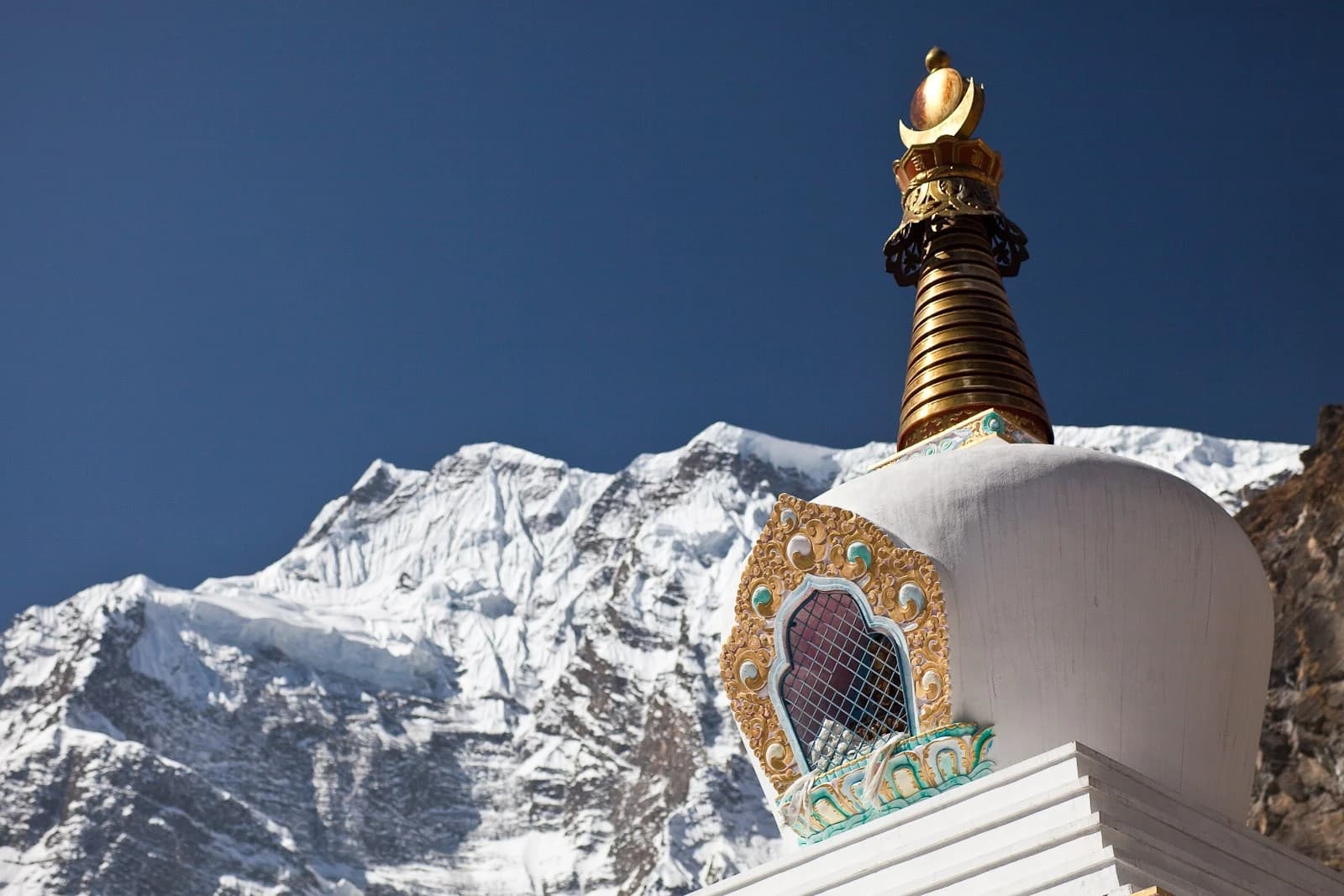
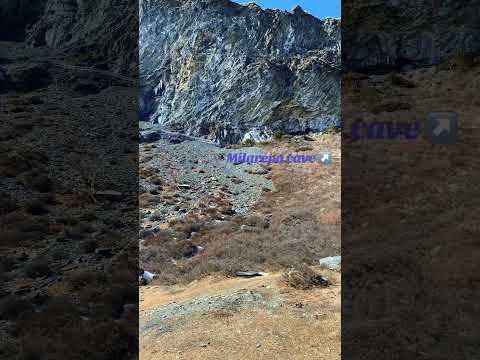
Milarepa Cave (Nyeshang Milarepa Cave), located at an altitude of approximately 4,000 metres in a serene glacial valley south of Braga, is a revered pilgrimage site associated with the great 11th-century Tibetan yogi, ascetic, and poet Jetsun Milarepa. According to Tibetan spiritual biographies, Milarepa spent several years meditating in solitary retreat in this hidden sanctuary beneath the icefalls of Annapurna III. Local legend recounts that while Milarepa was meditating here, a local hunter named Kyira Gombodorje arrived with hunting dogs pursuing an injured deer. Moved by Milarepa's compassionate presence and spiritual songs, the hunter surrendered his bow, arrows, and hound, renounced killing, and became one of the yogi's foremost disciples. The famous bow of the hunter was preserved for generations in the hermitage. The site features a small hermitage gompa, a natural rock cave adorned with prayer flags and oil lamps, and a rock slab bearing what devotees revere as the footprint of Milarepa. The hike from Braga or Manang ascends through pine groves, juniper pastures, and dramatic moraines, culminating in close-up vistas of glacial icefalls cascading directly from Annapurna III.
Milarepa Cave (Nyeshang Milarepa Cave), located at an altitude of approximately 4,000 metres in a serene glacial valley south of Braga, is a revered pilgrimage site associated with the great 11th-century Tibetan yogi, ascetic, and poet Jetsun Milarepa. According to Tibetan spiritual biographies, Milarepa spent several years meditating in solitary retreat in this hidden sanctuary beneath the icefalls of Annapurna III. Local legend recounts that while Milarepa was meditating here, a local hunter named Kyira Gombodorje arrived with hunting dogs pursuing an injured deer. Moved by Milarepa's compassionate presence and spiritual songs, the hunter surrendered his bow, arrows, and hound, renounced killing, and became one of the yogi's foremost disciples. The famous bow of the hunter was preserved for generations in the hermitage. The site features a small hermitage gompa, a natural rock cave adorned with prayer flags and oil lamps, and a rock slab bearing what devotees revere as the footprint of Milarepa. The hike from Braga or Manang ascends through pine groves, juniper pastures, and dramatic moraines, culminating in close-up vistas of glacial icefalls cascading directly from Annapurna III.
1 available
2 available
YouTube
Open YouTube
YouTube
Open YouTube
Discover More

Bhratang (also spelled Brathang), situated at 2,850 metres along the Marshyangdi River between Chame and Pisang, is a unique destination celebrated for both its breathtaking geological gorge and South Asia's largest high-altitude organic apple plantation. Historically, Bhratang was a strategic Trans-Himalayan outpost where the trail was blasted and carved directly into vertical granite cliffs hanging over the roaring river chasm. In recent years, the wide alluvial valley of Bhratang has been transformed by Agro Manang into the renowned "Farm of the Himalayas," covering over 75 hectares with hundreds of thousands of organic Italian-variety dwarf apple trees (Fuji, Gala, Golden Delicious). The estate represents a pioneering model of sustainable mountain agro-tourism in Nepal, complete with high-tech automated drip irrigation, modern fruit processing facilities, and an artisan cider distillery. Travelers and trekkers stop at Bhratang's upscale boutique lodge to sample freshly picked apples, warm apple pie, organic dried apple crisps, and fresh cider while marveling at the dramatic transition from lush forested canyons to the dry, rocky heights of upper Manang.

Braga Gompa (Bhraga Monastery), perched dramatically atop the highest rocky bluff of Braga village at 3,500 metres, is the oldest and culturally most important Tibetan Buddhist monastery in the Manang region. Founded approximately 600 years ago and affiliated with the Kagyupa school of Tibetan Buddhism, the monastery is revered as the spiritual anchor of the entire Nyeshang Valley. The main prayer hall (dukkha) houses an extraordinary religious treasure trove, including over 200 ancient statues of the Buddha, Bodhisattvas, and Buddhist masters crafted from terracotta, clay, and gilded bronze, displayed tier-upon-tier along ancient wooden altars. The interior walls are adorned with smoke-darkened frescoes depicting Buddhist deities and mandala cosmologies, while its library protects priceless collections of ancient Tibetan Kangyur and Tengyur xylograph woodblock scriptures wrapped in traditional silk. From the monastery's high rooftop balcony, visitors enjoy an uninterrupted vantage over the stacked houses of Braga village and the vast glaciated crest of Annapurna IV and Annapurna II across the valley. Monks and local caretakers welcome respectful visitors to observe daily prayer rituals, light butter lamps, and experience one of the finest living monuments of Himalayan Buddhist art.

Braga (also spelled Braka or Bhraka), located approximately two kilometres east of Manang village at 3,470 metres elevation, is one of the most picturesque and architecturally intact medieval settlements in the Nepal Himalayas. The village is built vertically into a south-facing limestone amphitheatre, with flat-roofed stone houses stacked directly atop one another so that the roof of one dwelling serves as the front veranda or courtyard for the home above. With origins dating back more than five centuries, Braga has retained an authentic pastoral Himalayan atmosphere. Below the terraced village lie communal buckwheat and barley fields bordered by willow groves along the Marshyangdi riverbank. Yaks and mountain goats are herded through narrow stone corridors between century-old dwellings, and wooden ladders carved from single tree trunks provide access to upper rooftops. Braga is famously crowned by the historic Braga Gompa, the oldest Tibetan Buddhist monastery in the Manang Valley. The village also acts as the primary starting point for day-hikes to Ice Lake (Kicho Tal) and Milarepa Cave. Its quiet ambiance, remarkable stone craftsmanship, and dramatic geological setting make it an essential cultural stop for photographers and heritage travelers.

Chame, situated at an altitude of 2,670 metres (8,760 feet), is the administrative capital and commercial center of Manang District. Nestled in a deep valley beneath dense pine and rhododendron forests, the town straddles the rushing waters of the Marshyangdi River and serves as the central hub for local governance, banking, communications, and emergency services. Visitors entering Chame from the east are greeted by a monumental wooden entrance gate and an expansive ancient mani wall adorned with hundreds of copper prayer wheels. Across the suspension bridge on the river's northern bank lies Chame's natural riverside hot springs (Tatopani), where mineral-rich thermal waters flow into concrete bathing pools offering soothing relaxation for tired travelers and trekkers. From various vantage points within Chame, views open up southward toward the icy spire of Lamjung Himal (6,983 m) and eastward toward the glistening walls of Annapurna II. Chame also serves as the junction point where trekkers depart for the restricted Nar-Phu Valley via nearby Koto, making it a pivotal destination on the Annapurna route.

Gangapurna Lake is a scenic high-altitude glacial lake situated at 3,500 metres elevation directly south of Manang village across the Marshyangdi riverbed. The lake was naturally formed by meltwater pooling from the active Gangapurna Glacier, which cascades directly from the northern icefluted pyramid of Mount Gangapurna (7,454 m) and neighboring Annapurna III (7,555 m). The lake is easily accessible via a short 20-minute walk from Manang village, crossing a wooden footbridge over the glacial river. A popular trail ascends from the lakeshore to the Chongkor viewpoint ridge (approximately 3,900 m), where hikers are rewarded with an extraordinary close-up panorama of the tumbling Gangapurna icefall, the blue-green glacial lake below, and the expansive amphitheatre of the upper Manang valley. Gangapurna Lake serves as a primary acclimatisation walk for trekkers preparing for the high-altitude crossing of Thorong La Pass or the trek to Tilicho Lake. The surrounding shoreline is framed by fragrant alpine juniper bushes, sea-buckthorn thickets, and dramatic alluvial terraces carved by millennia of glacial erosion.

Gyaru (also spelled Ghyaru), situated at 3,670 metres on the high scenic trail between Pisang and Manang, is widely considered one of the most dramatically perched medieval villages in Nepal. Perched upon a sheer cliff edge hundreds of metres above the Marshyangdi river gorge, the village is reached via a grueling zig-zag ascent from Upper Pisang that rewards trekkers with breathtaking views. The village has preserved medieval stone architecture virtually untouched by modernization. Tightly packed houses constructed of dry grey slate stone, heavy wooden beams, and mud mortar line narrow, maze-like passages. At the edge of the village, a massive centuries-old mani wall and whitewashed chortens stand against the backdrop of Annapurna II (7,937 m) and Annapurna IV (7,525 m), which appear close enough to touch across the valley. Gyaru offers basic community-run homestays and rustic tea shops where hikers can rest, sip butter tea, and enjoy freshly baked buckwheat bread while taking in what is widely celebrated as one of the finest mountain panoramas in the entire Himalayas.