YouTube
Mahabu Dham: The Sacred Himalayan Alpine Sanctuary of Dailekh and Kalikot | Radhe Radhe
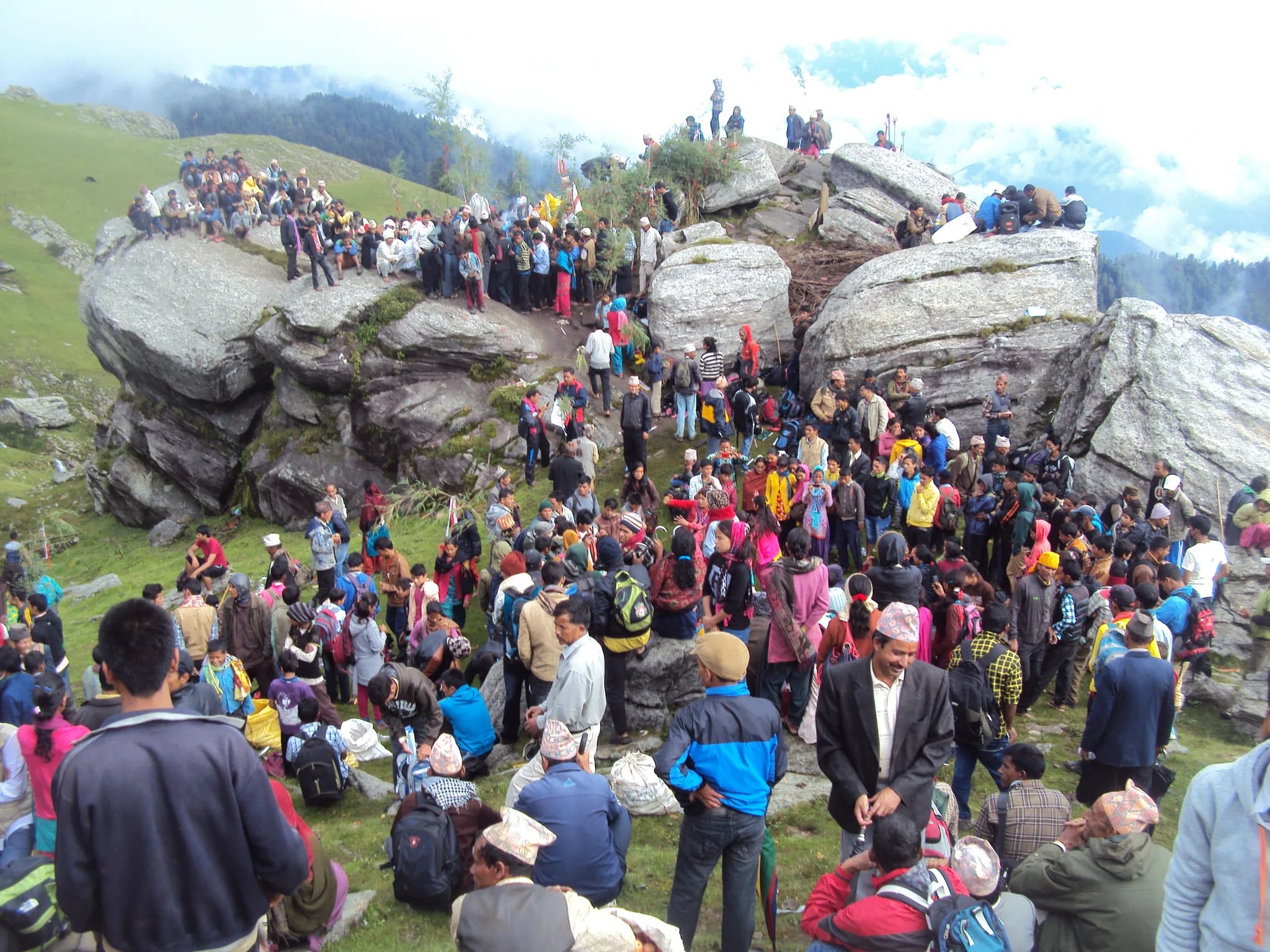
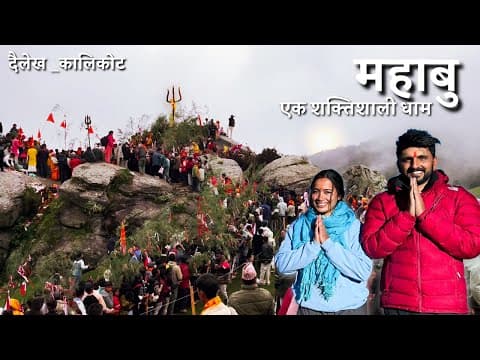
Mahabu Dham (महाबु धाम तथा महाबु लेक), perched atop the high alpine crest of Mahabu Lekh at an elevation of 4,168 meters in Mahabu Rural Municipality-4 on the northern border of Kalikot, is the highest geographic summit in Dailekh District and one of Western Nepal's most revered high-altitude pilgrimage sanctuaries. Dedicated to Lord Shiva (Mahabu Jagannath / Mahabu Mahadev), the sacred natural stone shrine sits amid rolling alpine meadows (*Bugyals*), vibrant rhododendron slopes, and crystal mountain tarns. For centuries, the pass served as the historic foot corridor connecting the Karnali heartlands of Dailekh with Kalikot and Jumla. During the auspicious full moon of Janai Purnima every August, over thirty thousand barefoot pilgrims undertake the arduous alpine ascent across blooming wildflower slopes to offer prayers, receive blessed sacred threads, and ring mountain bells at the summit. For adventurous trekkers and nature lovers, Mahabu offers exhilarating high-altitude ridge hiking, expansive 360-degree vistas across the Kanjiroba, Api, and Saipal Himalayan ranges, and authentic wilderness camping under starlit Himalayan skies.
Mahabu Dham (महाबु धाम तथा महाबु लेक), perched atop the high alpine crest of Mahabu Lekh at an elevation of 4,168 meters in Mahabu Rural Municipality-4 on the northern border of Kalikot, is the highest geographic summit in Dailekh District and one of Western Nepal's most revered high-altitude pilgrimage sanctuaries. Dedicated to Lord Shiva (Mahabu Jagannath / Mahabu Mahadev), the sacred natural stone shrine sits amid rolling alpine meadows (*Bugyals*), vibrant rhododendron slopes, and crystal mountain tarns. For centuries, the pass served as the historic foot corridor connecting the Karnali heartlands of Dailekh with Kalikot and Jumla. During the auspicious full moon of Janai Purnima every August, over thirty thousand barefoot pilgrims undertake the arduous alpine ascent across blooming wildflower slopes to offer prayers, receive blessed sacred threads, and ring mountain bells at the summit. For adventurous trekkers and nature lovers, Mahabu offers exhilarating high-altitude ridge hiking, expansive 360-degree vistas across the Kanjiroba, Api, and Saipal Himalayan ranges, and authentic wilderness camping under starlit Himalayan skies.
1 available
1 available
YouTube
Mahabu Dham: The Sacred Himalayan Alpine Sanctuary of Dailekh and Kalikot | Radhe Radhe
Discover More

The Bhurti Temple Complex (भूर्ती मन्दिर समूह तथा २२ देवल), situated in Narayan Municipality-7 just three kilometers north of Dailekh Bazaar, is one of Nepal's most extraordinary archaeological ensembles, inscribed on the UNESCO World Heritage Tentative List since 2008. Constructed during the medieval Khas Malla Empire between the 12th and 14th centuries, the complex preserves an astonishing cluster of 22 stone Shikhara-style towers (*Devals*) built entirely of finely dressed, dry-stone interlocking masonry without a drop of mortar or cementing material. Each monolith tower features ribbed amalaka crests, arched niches, and intricate floral relief friezes characteristic of Western Himalayan stone craftsmanship. Surrounding the spires is a medieval covered stone step-well reservoir (*Pathar Nauli*) that supplied ritual waters to temple priests. Representing the largest single contiguous concentration of ancient stone devals anywhere in Nepal, Bhurti offers travelers, historians, and architectural photographers an unforgettable journey into the architectural zenith of the medieval Sinja civilization.

Bilaspur Temple (बेलासपुर मन्दिर तथा बटुक भैरव), perched atop the prominent Bilaspur Danda ridge at approximately 1,600 meters in Narayan Municipality-1, was the royal palace-shrine and defensive citadel of the historic Bilaspur kingdom, one of the influential Baise Rajya principalities that flourished before the Gorkha unification. Dedicated to Batuk Bhairav and Goddess Durga, the hilltop temple features medieval stone sculptures, sacrificial courtyards, and ancient defensive wall foundations. The ridge commands breathtaking 360-degree vistas stretching across the entire Dailekh Bazaar basin, the winding Lohore river valley, and northern snow-covered Himalayan summits. Devotees climb the forested stone stairway up Bilaspur Danda during Dashain and Chaite Dashain to receive blessings for courage and protection, while hikers enjoy refreshing mountain breezes and sunset views over the Karnali hills.

Dailekh Kotgadi (कोतगढी), perched atop a central strategic hillock in Narayan Municipality-1 overlooking Dailekh Bazaar, is an imposing stone military fortress built around 1790 AD by Gorkhali Commander Amar Singh Thapa following the unification of western Nepal. Constructed with thick perimeter dry-stone walls, circular guard bastions, and subterranean ammunition storerooms, the fort commanded 360-degree surveillance across the entry corridors of the Karnali hills. Preserved within the citadel grounds is the legendary 235-year-old bronze cannon named *Sundari Top*, alongside original guard barracks and commemorative flagpoles. Recently protected and beautified as a national historical park, Kotgadi offers panoramic vistas of the surrounding green Dailekh valley, Bilaspur ridge, and pine-clad hills, making it a favorite vantage point for sunset walks and historical exploration.

Dhuleshwar Temple (धुलेश्वर मन्दिर), crowning a breezy mountain crest at approximately 1,420 meters elevation in Dullu Municipality-6 near the Bhairabi border, is the central and most mystifying shrine of the Panchakoshi pilgrimage. According to mythology, the holy dust (*Dhuli*) from Goddess Sati's body fell on this peak. Geologically, Dhuleshwar is an ancient dormant mud-volcanic vent where subterranean natural gases continuously seep through apertures in the rock, creating a constant hissing murmur and causing loose soil and dust to swirl gently into the air above the sacred underground flame without extinguishing it. Pilgrims climb the scenic mountain trail to make offerings and receive the blessed holy ash (*Dhuleshwar Bhasma*), while enjoying sweeping panoramic vistas across the terraced valleys of Dailekh and the snow-capped Himalayan ranges to the north.

Dullu Durbar & Historical Complex (दुल्लु दरबार तथा ऐतिहासिक सम्पदा क्षेत्र), located in the ancient town center of Dullu Municipality-2, was the celebrated winter capital of the medieval Khas Malla Empire and subsequently the royal citadel of the Baise principality of Dullu. The complex encompasses a wealth of nationally protected monuments, including the ruins of the medieval royal palace, the 19th-century Kaji Jasapau Thapa Pauwa (a two-story heritage travelers' rest house adorned with intricate wooden carvings), the Damupal stone inscription dating back to 981 AD (recognized as the oldest written Nepali script inscription), and Pathar Nauli, a stone step-well reservoir constructed in 1354 AD. Walking through the stone-paved lanes of Dullu provides visitors a rare and evocative window into centuries of royal intrigue, frontier administration, and classical Himalayan arts.

Dungeshwar Mahadev Dham (डुङ्गेश्वर महादेव धाम), located in Dungeshwor Rural Municipality-6 at the dramatic confluence of the Lohore Khola and Karnali/Chhamghat rivers, sits at the lowest elevation point in Dailekh District at approximately 545 meters above sea level. Revered for centuries as an auspicious *Matathirtha* and regional Shaivite pilgrimage center, the sanctuary houses the sacred Siddheshwar Mahadev cave-shrine and traditional riverside bathing ghats. Devotees travel from across Dailekh, Surkhet, and Achham to perform holy dips, ancestral Tarpan rituals, and special pujas during Maha Shivaratri, Balachaturdashi, and the month of Magh. Surrounded by dramatic subtropical river canyons and lush forested ridges, Dungeshwar serves as a peaceful spiritual gateway welcoming travelers as they ascend from the Terai plains into the historical highlands of Dailekh.