YouTube
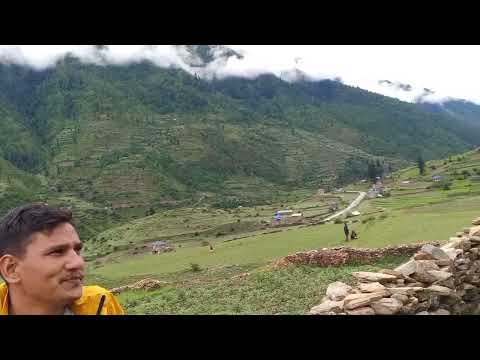
Traditional village life and valley landscape of Lamra and Haku in Tatopani, Jumla (Video: Gajendra Shahioffical YouTube)
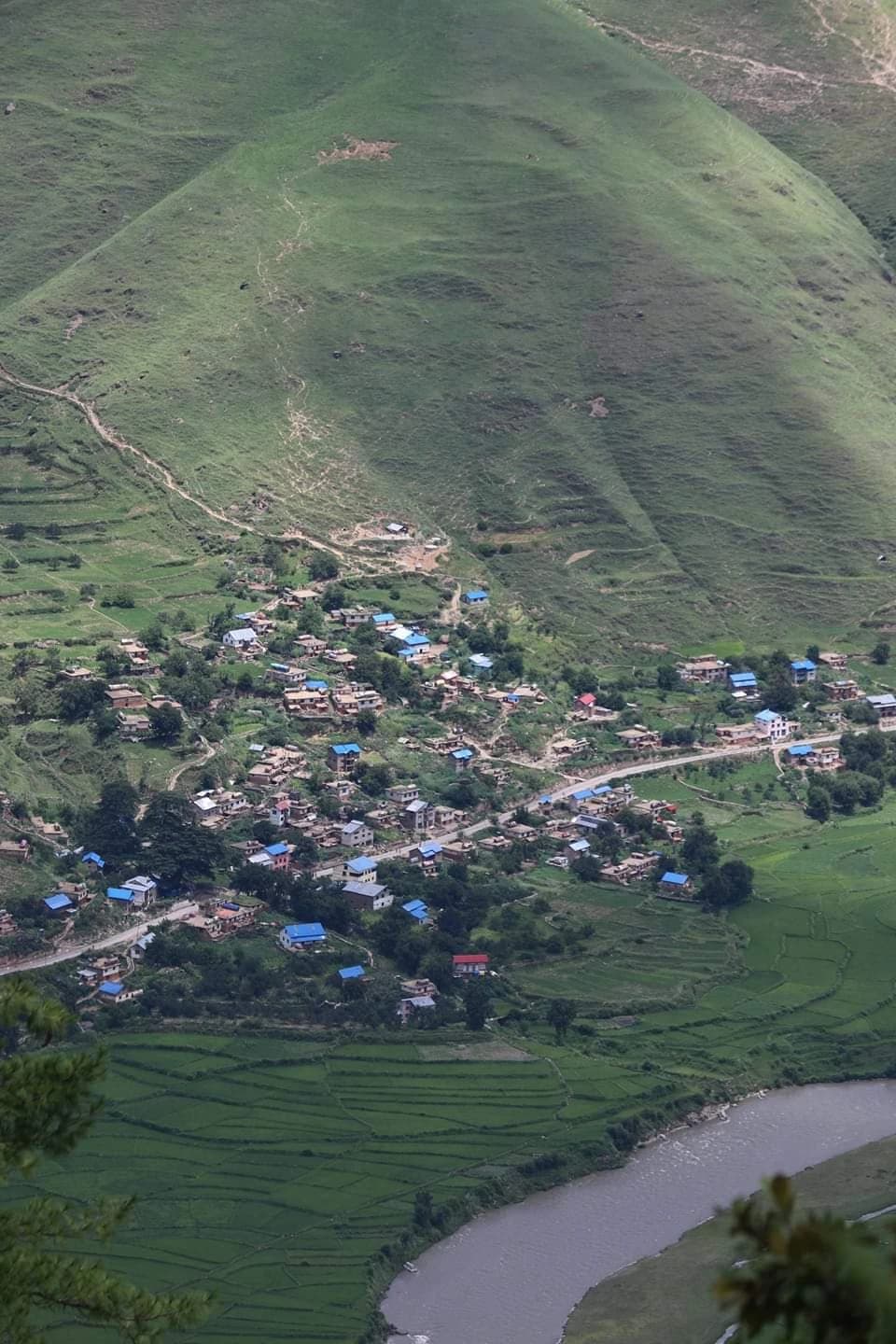
Nestled along the sunlit river terraces of the Tila River valley in Tatopani Rural Municipality (Wards 6 and 7), Lamra Traditional Khas Heritage Village (लाम्रा मौलिक परम्परागत खस गाउँ) is widely recognized by anthropologists and cultural geographers as one of the most remarkably preserved living examples of classical Khas vernacular settlement architecture in Western Nepal. Built into sloping terrain, the village exhibits contiguous, multi-tiered stone and Himalayan cedar timber dwellings featuring flat clay-plastered rooftops (chhaanas) interconnected by notched wooden log ladders. In traditional Khas architectural harmony, the earthen roof of each lower residence serves as the sun-drenched drying courtyard (aagan) and threshing terrace for the household above. The village is adorned with intricately carved antique wooden lattice windows (aankhijhyal), stone-paved alleys, communal assembly dewal courtyards, and operational traditional watermills (ghattas) powered by mountain streams. Preserving an unbroken living heritage of indigenous shamanic rituals, Dhami oracle performances, Hudke folk music, and organic Jumli Marsi red rice farming, Lamra provides visitors an authentic and immersive journey into the traditional heartland of Karnali's ancient culture.
Nestled along the sunlit river terraces of the Tila River valley in Tatopani Rural Municipality (Wards 6 and 7), Lamra Traditional Khas Heritage Village (लाम्रा मौलिक परम्परागत खस गाउँ) is widely recognized by anthropologists and cultural geographers as one of the most remarkably preserved living examples of classical Khas vernacular settlement architecture in Western Nepal. Built into sloping terrain, the village exhibits contiguous, multi-tiered stone and Himalayan cedar timber dwellings featuring flat clay-plastered rooftops (chhaanas) interconnected by notched wooden log ladders. In traditional Khas architectural harmony, the earthen roof of each lower residence serves as the sun-drenched drying courtyard (aagan) and threshing terrace for the household above. The village is adorned with intricately carved antique wooden lattice windows (aankhijhyal), stone-paved alleys, communal assembly dewal courtyards, and operational traditional watermills (ghattas) powered by mountain streams. Preserving an unbroken living heritage of indigenous shamanic rituals, Dhami oracle performances, Hudke folk music, and organic Jumli Marsi red rice farming, Lamra provides visitors an authentic and immersive journey into the traditional heartland of Karnali's ancient culture.
1 available
1 available
YouTube
Traditional village life and valley landscape of Lamra and Haku in Tatopani, Jumla (Video: Gajendra Shahioffical YouTube)
Discover More

Standing as the paramount spiritual, historical, and cultural heartbeat of Jumla District and the greater Karnali basin, the Chandannath & Bhairavnath Temple Complex (चन्दननाथ तथा भैरवनाथ मन्दिर परिसर) is situated at the center of Khalanga Bazaar. Dedicated to Lord Dattatreya—the revered composite trimurti manifestation of Brahma, Vishnu, and Shiva—the sacred temple was established between the 10th and 14th centuries during the Kallala Dynasty by the legendary Kashmiri saint Baba Chandannath. Historical folklore credits Baba Chandannath with introducing cold-tolerant Jumli Marshi red rice to the mountain valleys of Karnali, making the temple both a spiritual shrine and an agricultural heritage monument. The complex is globally famous for its monumental Ghatasthapana festival ritual on the first day of Dashain, when two colossal sacred wooden flagpoles (lingos)—a 52-cubit (52-haate) pole for Chandannath symbolizing the 52 weeks of the year and a 48-cubit pole for Bhairavnath—are renewed in a thunderous assembly of thousands of pilgrims. Housing an unbroken eternal flame (akhanda deep) and ancient silver deities, this sacred sanctuary offers visitors an unforgettable encounter with Western Nepal's living spiritual traditions.

Crowning the subalpine mountain ridge separating the Khalanga basin from the northern Karnali valleys, Danphe Lekh / Danphe Lagna Pass (डाँफे लेक तथा डाँफे लग्न भञ्ज्याङ) stands at an altitude of approximately 3,689 meters above sea level. Named after Nepal's national bird, the Danphe (Himalayan Monal), which inhabits the high rhododendron, birch, and fir groves along its slopes, this historic mountain pass is an essential landmark on the legendary trans-Himalayan foot route connecting Jumla Khalanga with the Sinja Valley and Rara Lake. The summit ridge offers an astonishing 360-degree panoramic vista across the snow-clad massifs of the Kanjiroba Himal range, Mount Patarasi, and the rolling evergreen valleys of the Tila and Jawa rivers below. Renowned in contemporary athletic history, Danphe Lekh serves as the most demanding mountain climb and celebrated checkpoint of the annual international Jumla-Rara Ultra Marathon, founded by world champion mountain runner Hari Bahadur Rokaya. In winter, the pass transforms into a pristine snowy wonderland, while spring blankets the ridgeline in vibrant crimson and pink rhododendron blossoms.

Flowing naturally along the dramatic banks of the Tila River, the Jumla Tatopani Natural Geothermal Springs (जुम्ला तातोपानी प्राकृतिक तातोपानी धारा) is Western Nepal's most celebrated balneological wellness and hydrothermal destination. Emanating directly from subterranean geological fissures, the mineral-rich geothermal springs discharge water at a consistent, soothing temperature of 40°C to 45°C throughout all seasons, even during freezing Himalayan winter snowfalls. Rich in sulfur, calcium, and revitalizing volcanic minerals, the waters are renowned throughout Karnali for their natural therapeutic and curative properties against rheumatoid arthritis (baat rog), joint inflammation, sciatica, and chronic skin ailments. The site features dedicated segregated stone-lined communal bathing spouts and immersion pools maintained by Tatopani Rural Municipality. Located conveniently adjacent to the Karnali Highway corridor, it provides travelers with a deeply restorative natural hot spring experience surrounded by whispering pine forests and rushing mountain waters.

Perched high on the subalpine mountain crest above Patmara in Patarasi Rural Municipality (Ward 7) at an elevation of approximately 3,350 meters, Khali Patan Alpine Meadow & Pass (खली पाटन तथा पाटमारा भञ्ज्याङ) is one of Jumla District's most expansive and serene high-altitude grassland plateaus. Situated along the classical Great Himalaya Trail (GHT) and the historic trekking route linking Jumla Khalanga with Rara Lake via the Chuchhemara range, this pristine undulating meadow serves as a vital high-altitude acclimatization stop and wilderness camping ground. During the summer monsoon and early autumn, the undulating green pasturelands are blanketed with carpets of alpine wildflowers, Himalayan edelweiss, and fragrant medicinal flora, providing traditional seasonal grazing grounds for pastoral sheep herds. The panoramic ridge commands an awe-inspiring 360-degree vantage point overlooking the snow-capped glaciated pyramids of the Mount Patarasi and Kanjirowa massifs to the north and east, as well as the deep forested valleys of the Tila basin to the south. With pristine fresh mountain air, quiet cedar-fringed borders, and stunning sunrises over Western Nepal's greatest mountain ranges, Khali Patan offers trekkers an unforgettable Himalayan wilderness experience.

Plunging majestically down sheer, iron-rich crimson rock cliffs in eastern Jumla, Shankar Jharana Waterfall (शङ्कर झरना / रातामाटा छहरा)—also celebrated in local dialects as Ratamata Chhahara—is the tallest and most breathtaking perennial waterfall in Jumla District. Situated in Ward 2 (Peregaon) of Patarasi Rural Municipality approximately 18 kilometers east of the district headquarters at Khalanga, the waterfall drops over 70 meters into a foaming mountain plunge pool within a pristine forested canyon amphitheater. Fed by icy glacial meltwaters originating from the high cirques of the Mount Patarasi massif, the waterfall is considered sacred by local Himalayan communities, who named it in reverence to Lord Shankar (Shiva) and perform prayers at the site during Shrawan and Janai Purnima. The surrounding hiking trail passes through traditional cedar and birch woodlands, fragrant wild herbal slopes, and terraced mountain hamlets where the Jawa River races below. As one of Karnali Province's most photogenic and pristine natural cascades, Shankar Jharana is an exceptional wilderness eco-tourism and day-trekking destination for travelers exploring the upper valleys of Jumla.

Nestled along the winding turquoise currents of the Hima River, the Sinja Valley Archaeological Site & Khas Capital (सिन्जा उपत्यका पुरातात्विक क्षेत्र तथा खस राजधानी) is one of the most culturally momentous landscapes in the Himalayas. Inscribed on the UNESCO World Heritage Tentative List in 2008, Sinja was the imperial summer capital of the mighty Khas Malla Empire from the 12th to the 14th century, commanding trade routes between Western Tibet and Northern India. Revered as the historic birthplace of the Khas (Nepali) language, the valley preserves the earliest official rock and stone-pillar inscriptions in Devanagari script dating to the 13th century. Archaeological excavations conducted jointly by the Department of Archaeology and Cambridge University have uncovered the royal citadel of Lamathada, rings of monolithic stone memorial columns (shilastambhharu), medieval stone dewals, and an elaborate underground terracotta aqueduct system. Framed by emerald pine hills, terraced fields of buckwheat, and centuries-old wooden cantilever bridges, Sinja offers travelers a profound pilgrimage into the genesis of Nepal's national tongue and medieval royal civilization.