YouTube
Open YouTube
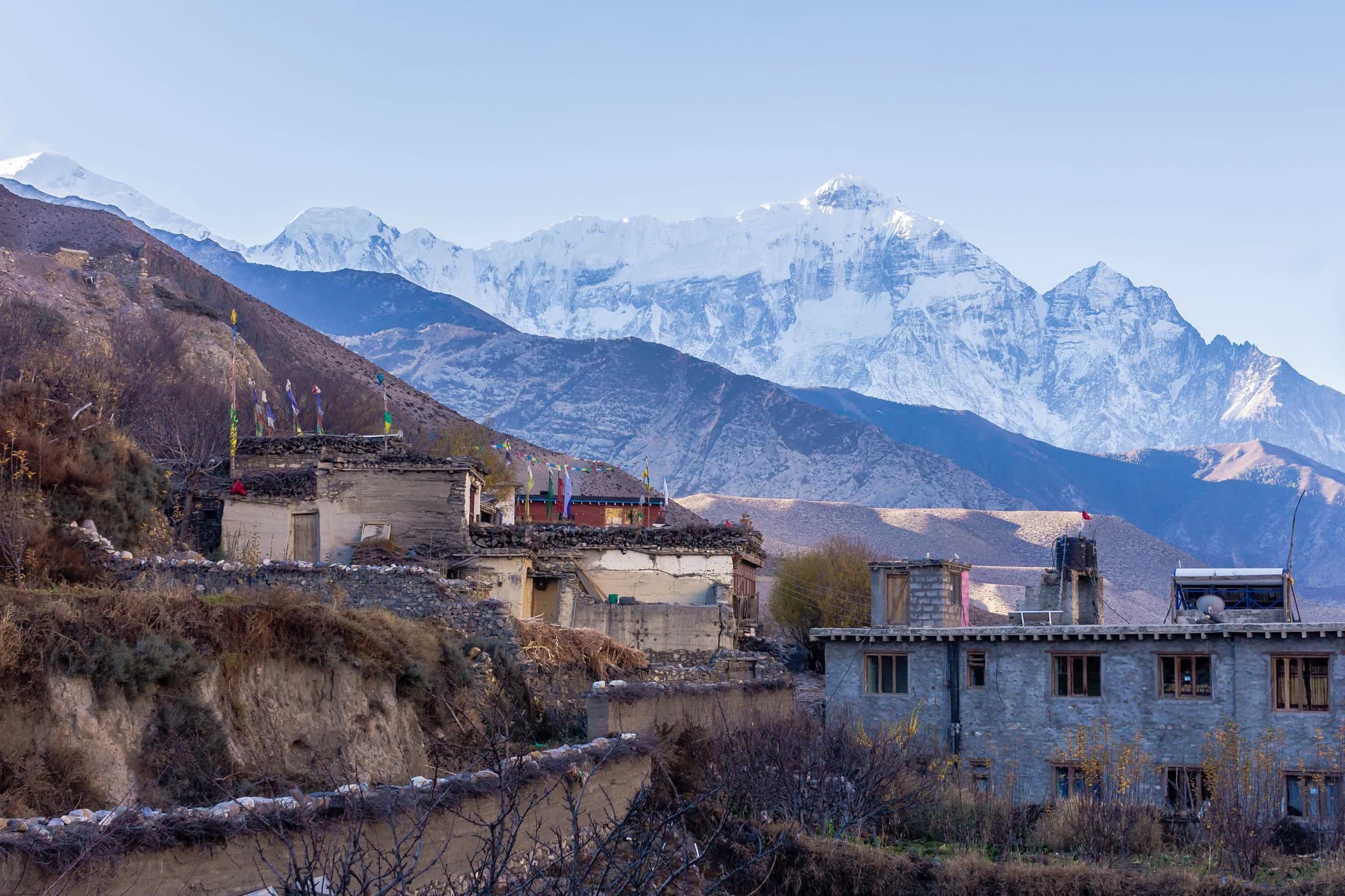
Kagbeni is an ancient medieval oasis town and the historic fortified gateway to Upper Mustang, perched at an altitude of 2,804 metres at the strategic confluence of the Kali Gandaki River and the Thorong (Jhobang) Khola. First settled over a thousand years ago along the primary Trans-Himalayan salt trade highway connecting Tibet and the Indian plains, Kagbeni is an unforgettable architectural step back in time. The village features mud-brick and flagstone houses packed tightly around dark covered stone tunnels, designed to deflect the fierce gale-force afternoon winds sweeping up the Kali Gandaki canyon. Terraced emerald fields of barley, buckwheat, and apple orchards contrast sharply with the bleached, wind-carved desert crags that frame the town. At its spiritual heart stands Kag Chode Thupten Sampheling Gompa, an imposing 15th-century red-ochre Sakya monastery housing ancient thangkas, bronze sculptures, and clay effigies. Kagbeni is also revered in Hindu and Buddhist pilgrimage tradition as Kagbeni Ghat, an exceptionally auspicious 'Pitri-Tirtha' (sacred ancestral river junction) where pilgrims from across Nepal perform annual ancestral remembrance rituals (Pinda Daan). As the northernmost point reachable without an Upper Mustang restricted-area permit, Kagbeni marks the magical threshold between Lower and Upper Mustang.
Kagbeni is an ancient medieval oasis town and the historic fortified gateway to Upper Mustang, perched at an altitude of 2,804 metres at the strategic confluence of the Kali Gandaki River and the Thorong (Jhobang) Khola. First settled over a thousand years ago along the primary Trans-Himalayan salt trade highway connecting Tibet and the Indian plains, Kagbeni is an unforgettable architectural step back in time. The village features mud-brick and flagstone houses packed tightly around dark covered stone tunnels, designed to deflect the fierce gale-force afternoon winds sweeping up the Kali Gandaki canyon. Terraced emerald fields of barley, buckwheat, and apple orchards contrast sharply with the bleached, wind-carved desert crags that frame the town. At its spiritual heart stands Kag Chode Thupten Sampheling Gompa, an imposing 15th-century red-ochre Sakya monastery housing ancient thangkas, bronze sculptures, and clay effigies. Kagbeni is also revered in Hindu and Buddhist pilgrimage tradition as Kagbeni Ghat, an exceptionally auspicious 'Pitri-Tirtha' (sacred ancestral river junction) where pilgrims from across Nepal perform annual ancestral remembrance rituals (Pinda Daan). As the northernmost point reachable without an Upper Mustang restricted-area permit, Kagbeni marks the magical threshold between Lower and Upper Mustang.
1 available
2 available
YouTube
Open YouTube
YouTube
Open YouTube
Discover More

The Chhoser Sky Caves (most famously Shija Jhong Cave) are an awe-inspiring archaeological wonder and cliff-dwelling architectural marvel located in Chhoser, approximately 10 kilometres north of Lo Manthang near the border of Tibet. Carved into the sheer vertical red and golden sandstone cliffs hundreds of feet above the valley floor, these ancient human-made cave complexes date back between 2,000 and 3,000 years. Shija Jhong Cave is a remarkable five-story vertical fortress containing over 40 interconnected rock-cut rooms linked by steep internal ladders, natural tunnels, and carved windows looking out over the arid Himalayan landscape. Archaeological research reveals these sky caves served successively as ancient burial chambers, multi-level defensive citadels during periods of warfare, and later as meditative hermitages and storage chambers for sacred scriptures. Visitors can climb up sturdy wooden ladders to explore the inner chambers, storage vaults, hearths, and observation openings cut straight into the stone face. The surrounding Chhoser valley also features Niphu Gompa (a cave monastery built directly against the rock wall) and Garphu Gompa, making Chhoser the most profound open-air museum of prehistoric cliff architecture in the Himalayas.

Chungsi Cave (also known as the Guru Rinpoche Cave of Samar) is a spectacular natural and sacred cave sanctuary perched high on the sheer rock wall of a dramatic canyon between Samar and Syangbochen in Upper Mustang, at an elevation of approximately 3,400 metres. Revered as one of the most potent meditation hermitages of the 8th-century master Guru Padmasambhava, the cave is a crucial pilgrimage shrine along the ancient trade and spiritual trail. Inside the cave's natural limestone amphitheater, mineral seepages and stalagmitic formations have created natural self-manifested (Rangjung) sacred effigies worshipped as Tara, Guru Rinpoche, and chortens. The cave is managed by resident Buddhist caretaker monks who maintain butter lamps and provide blessings to passing trekkers and Tibetan pilgrims. The trail to Chungsi Cave winds down through a magnificent labyrinth of towering, wind-carved sandstone gorges and dry canyon bridges, surrounded by wild rose bushes and alpine juniper. The serene silence of the hermitage and its dramatic geological setting provide a deeply contemplative experience for travelers traversing the threshold into Upper Mustang.

Dhumba Lake (Dhumba Taal) is an emerald-green sacred freshwater lake nestled in an alpine depression at an elevation of 2,830 metres, roughly 5 kilometres southwest of Jomsom beneath the imposing northern face of Mount Nilgiri. Revered by Buddhists and Hindus alike as a holy pilgrimage sanctuary, the lake is associated with Kuchap Ternga Gompa (an ancient Guru Padmasambhava monastery situated on the pine-covered hillside above). According to local religious tradition, the lake is the sacred residence of a divine water spirit (Naga). The water is considered so pure and spiritually potent that it is transported to Kuchap Ternga Gompa to perform daily morning offerings and sacred rituals before prayers. To preserve its spiritual sanctity and pristine nature, swimming, boating, and washing in the lake are strictly prohibited. The lake is surrounded by prayer flags that flutter in the mountain breeze, rustic wooden benches, and traditional chortens. A leisurely 1.5 to 2-hour walk from Jomsom through the historic Thakali village of Thini, passing traditional stone alleys and terraced buckwheat fields, makes Dhumba Lake one of the most accessible and peaceful half-day excursions in Lower Mustang.

Ghar Gompa (also known as Lo Gekar Monastery, meaning 'Pure Virtue of Lo') is one of the oldest, most sacred, and historically momentous Tibetan Buddhist monasteries in the entire world, situated in an isolated valley near Marang village in Upper Mustang at an altitude of 3,950 metres. Consecrated in the 8th century by the legendary master Guru Padmasambhava (Guru Rinpoche), Ghar Gompa was built before Samye Monastery in Tibet. According to Buddhist hagiography, Guru Padmasambhava was invited to Tibet by King Trisong Detsen to build Samye, but demonic forces continuously disrupted construction. Guru Rinpoche traveled to Upper Mustang to slay the demoness, pinning her limbs across the landscape, and built Ghar Gompa over her heart to purify the realm and bind the protective spirits of the Himalayas to Dharma. The ancient Nyingma monastery is famed for its hundreds of intricately painted stone relief carvings (slates) lining the walls, depicting Buddhas, Bodhisattvas, and fierce protective deities in mineral pigments that remain vibrant after more than twelve centuries. Pilgrims circumambulate the massive red-banded chortens and turn the ancient wooden prayer wheels, believing that prayers offered at Ghar Gompa fulfill all virtuous aspirations.

Jomsom (Dzongsam, meaning 'New Fort') is the administrative headquarters, principal transport hub, and commercial capital of Mustang District, situated at an altitude of 2,720 metres on both banks of the Kali Gandaki River. Positioned directly between the colossal massifs of Mount Dhaulagiri (8,167m) to the west and Mount Nilgiri (7,061m) to the east, Jomsom serves as the indispensable gateway for trekkers heading to Muktinath, the Annapurna Circuit, and Upper Mustang. The town is home to Jomsom Airport (JTR), one of the world's most thrilling high-altitude mountain airstrips, where Twin Otter aircraft land and take off before midday through the deep mountain trench before severe afternoon valley winds set in. Jomsom is divided into two distinct sectors: Old Jomsom on the western bank, featuring traditional stone alleys and ancient Thakali residences, and New Jomsom around the airport strip, offering banks, government offices, trekking permit checkpoints, modern hotels, and mountain flight services. Beyond its logistical importance, Jomsom provides dramatic viewpoints of Nilgiri North and South towering sheer over the dusty river terraces. It is a premier location for fossil enthusiasts searching the river gravels for sacred black ammonite fossils (Saligrams), revered as embodiments of Lord Vishnu.

The Kali Gandaki River Gorge (also known as the Andha Galchhi) is widely recognized as the deepest gorge in the world, measuring an astounding vertical depth of over 5,500 metres (approximately 18,000 feet). The gorge is sliced clean through the main Himalayan axis between two of the planet's highest eight-thousand-metre giants: Mount Dhaulagiri (8,167m) to the west and Mount Annapurna I (8,091m) to the east, while the rushing riverbed at Kowang and Dana lies at barely 2,500 metres elevation. Geologically, the Kali Gandaki is an antecedent river that existed before the rise of the Himalayas, cutting through the rising tectonic plateau over millions of years. The river canyon acts as a colossal meteorological funnel, generating legendary howling southern winds every afternoon that sweep through the valley. The gravel riverbeds of the Kali Gandaki are famous worldwide as the exclusive source of sacred Shaligram (Saligram) stones—fossilized black ammonite shells dating back over 150 million years to the prehistoric Tethys Sea. Revered by Hindus worldwide as the living manifestation of Lord Vishnu, these fossils make the gorge a site of profound theological, geological, and trekking wonder.