YouTube
Open YouTube
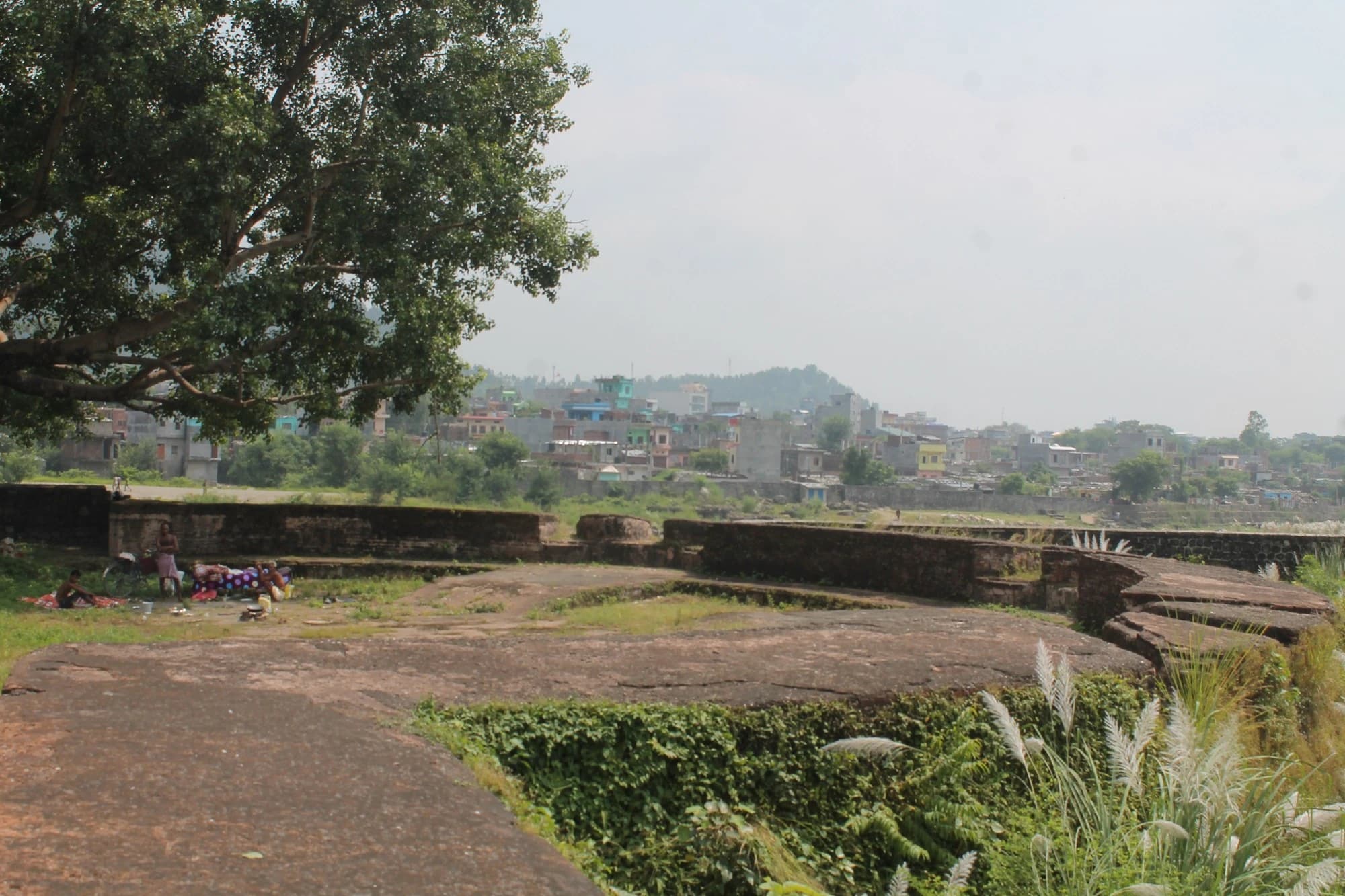
Jitgadhi Fort (जितगढी किल्ला), situated on the western bank of the Tinau River in Butwal Sub-Metropolitan City Ward 1 of Rupandehi District, is one of Nepal's most revered military heritage monuments. Constructed during the late medieval period and heavily reinforced by the Kingdom of Gorkha, the fortress gained legendary historical prominence during the Anglo-Nepal War (1814–1816 AD). In April 1815, Gorkhali forces under the command of Colonel Ujir Singh Thapa mounted a brilliant strategic defense from within Jitgadhi's fortified earthen and stone ramparts. Despite facing vastly superior numbers and modern artillery deployed by the British East India Company under Major-General John Sullivan Wood, the Nepali defenders repelled the invading forces and inflicted severe casualties, forcing an ignominious British retreat back across the Terai border to Gorakhpur. Today, Jitgadhi Fort stands as a preserved national historic park and monument of patriotic valor. The heritage complex features restored stone battlements, cannon embrasures, and tactical watchposts overlooking the Tinau gorge, anchored by a monumental life-sized bronze statue of Colonel Ujir Singh Thapa. An on-site war museum, decorative park gardens, and illustrated interpretive exhibits explain the strategy of the Anglo-Nepal War, making it an essential cultural and educational landmark for travelers visiting the Butwal urban gateway.
Jitgadhi Fort (जितगढी किल्ला), situated on the western bank of the Tinau River in Butwal Sub-Metropolitan City Ward 1 of Rupandehi District, is one of Nepal's most revered military heritage monuments. Constructed during the late medieval period and heavily reinforced by the Kingdom of Gorkha, the fortress gained legendary historical prominence during the Anglo-Nepal War (1814–1816 AD). In April 1815, Gorkhali forces under the command of Colonel Ujir Singh Thapa mounted a brilliant strategic defense from within Jitgadhi's fortified earthen and stone ramparts. Despite facing vastly superior numbers and modern artillery deployed by the British East India Company under Major-General John Sullivan Wood, the Nepali defenders repelled the invading forces and inflicted severe casualties, forcing an ignominious British retreat back across the Terai border to Gorakhpur. Today, Jitgadhi Fort stands as a preserved national historic park and monument of patriotic valor. The heritage complex features restored stone battlements, cannon embrasures, and tactical watchposts overlooking the Tinau gorge, anchored by a monumental life-sized bronze statue of Colonel Ujir Singh Thapa. An on-site war museum, decorative park gardens, and illustrated interpretive exhibits explain the strategy of the Anglo-Nepal War, making it an essential cultural and educational landmark for travelers visiting the Butwal urban gateway.
1 available
2 available
YouTube
Open YouTube
YouTube
Open YouTube
Discover More

Devdaha Koliya Heritage (देवदह / भवानीपुर), situated approximately 35 kilometers east of Lumbini in Devdaha Municipality of Rupandehi District, represents one of the most vital archaeological sectors of the Greater Lumbini Buddhist Circuit. Historically, Devdaha served as the royal capital of the ancient Koliya republic—the maternal home of Queen Maya Devi (the biological mother of Siddhartha Gautama), Queen Prajapati Gautami (his foster mother and aunt), and Princess Yashodhara (his royal consort). The focal point of the heritage area is the Bhawanipur archaeological complex, where excavations conducted by the Department of Archaeology have revealed ancient brick foundations, stupa plinths, and sacred votive structures dating from the Shakya-Koliya period through the Kushan era. Prominently standing within the compound is a polished sandstone pillar fragment identified by scholars with Emperor Ashoka's 3rd-century BCE imperial pilgrimage, alongside the ancient Kanyamai temple honoring maternal lineage deities. Surrounded by tranquil rural landscapes, orchards, and traditional agricultural communities, Devdaha offers a profoundly quiet, contemplative pilgrimage atmosphere distinct from busier tourist hubs. It is widely visited by Buddhist scholars, international pilgrims, and cultural heritage enthusiasts retracing the intimate familial origins and youth of Gautama Buddha in the ancient Rohini river basin.

The Lumbini International Monastic Zone (लुम्बिनी अन्तर्राष्ट्रिय विहार क्षेत्र) is a magnificent architectural and spiritual precinct flanking the central canal of Kenzo Tange's master-planned sacred zone in Lumbini Cultural Municipality, Rupandehi. Conceived as a living symbol of universal Buddhist unity, the zone is formally separated by the central canal into two distinct theological traditions: the Eastern Monastic Zone dedicated to Theravada Buddhist monasteries, and the Western Monastic Zone dedicated to Mahayana and Vajrayana monasteries. Within this vast, beautifully landscaped forest park, more than thirty sovereign nations and international Buddhist organizations have constructed authentic monumental monasteries representing their indigenous architectural traditions. Highlights include the gleaming white marble Royal Thai Monastery with its soaring gilded finials, the golden palatial Chinese Zhong Hua Monastery reflecting Beijing's Forbidden City architecture, the exquisite German Lotus Stupa adorned with vibrant Tibetan tantric murals, the serene Cambodian Pagoda, and the ornate monasteries of Sri Lanka, France, South Korea, Myanmar, Vietnam, and Mongolia. Travelers and spiritual pilgrims can explore the Monastic Zone via peaceful canal boat rides, rented bicycles, or shaded walking avenues connecting the monastic compounds. The monasteries offer rare opportunities to observe distinct monastic rituals, study diverse Buddhist philosophical lineages, and experience contemplative meditation in some of the most stunning sacred architecture in South Asia.

Lumbini is one of the holiest sites in the world and the birthplace of Siddhartha Gautama, the historical Buddha, born in approximately 623 BCE. Designated a UNESCO World Heritage Site in 1997, Lumbini's Sacred Garden encompasses the Maya Devi Temple -- built over the exact spot of the nativity -- along with the preserved Ashoka Pillar, erected by Emperor Ashoka of India in 249 BCE to mark his pilgrimage to the site. The pillar's inscription confirms Lumbini as Buddha's birthplace and remains one of the oldest written records in Nepal. The Lumbini Development Zone, designed by Japanese architect Kenzo Tange, is divided into three main areas: the Sacred Garden at the centre (containing the Maya Devi Temple and Ashoka Pillar), the East Monastic Zone (Theravada Buddhist monasteries), and the West Monastic Zone (Mahayana and Vajrayana monasteries from over 30 countries). The sacred central pond, the Puskarini (or Bodhi Pond), where Queen Mayadevi bathed before giving birth, borders the temple complex. For both Buddhists and non-Buddhists, Lumbini offers an atmosphere of profound peace and historical gravity. The site draws pilgrims from across Nepal, India, Sri Lanka, Japan, China, Myanmar, Thailand, and beyond. The surrounding Lumbini Province contains several related Buddhist circuit sites including Tilaurakot and Devdaha. The best time to visit is October through March when temperatures are mild. Bhairahawa (Gautam Buddha International Airport) is the nearest airport, approximately 22 km from the site. Lumbini is approximately 270 km from Kathmandu by road.

Manimukunda Sen Park (मणिमुकुन्द सेन उद्यान), widely celebrated by locals as Phulbari (फुलबारी), is a sprawling historical leisure and botanical garden nestled at the base of the Chure hill foothills in Butwal-14, Rupandehi. Spanning lush terraced grounds along the northern fringe of the city, the park preserves the 16th-century winter palace ruins of King Manimukunda Sen, the legendary monarch of the Sen dynasty of Palpa who once governed vast territories across the western hills and plains. The park seamlessly integrates centuries of royal history with verdant recreational amenities. Visitors can explore excavated antique brick masonry, royal well installations, and structural foundations believed to be the chambers of the monarch's seasonal royal court. Beyond its archaeology, Phulbari functions as the primary botanical park of the Butwal urban corridor, shaded by mature sal, ficus, and flowering ornamental trees interspersed with manicured flowerbeds, fountains, and picnic lawns. A mini-zoo and wildlife rescue sanctuary within the park premises houses indigenous Terai and hill fauna, including spotted deer, nilgai, and native bird species. Elevated view gazebos along the upper ridge offer panoramic vistas overlooking the sprawling city of Butwal, the winding Tinau riverbed, and the southern plains stretching into the horizon, making Phulbari a cherished destination for cultural heritage exploration and family weekend outings.

Marchawari Mai Temple (मर्चवारी माई मन्दिर), situated in Bogadi village of Marchawari Rural Municipality in southern Rupandehi District, is the most sacred and ancient rural Shakti Peeth shrine in the historic Marchwar region. Located in the fertile agricultural flatlands approximately four kilometers north of the international border with Uttar Pradesh, India, the temple is revered as the mother protector and guardian deity of the southern plains communities. According to deeply cherished local folklore, the goddess appeared centuries ago in a dream to an impoverished local grass-cutter (Ghansi), commanding him to follow a divine stream of milk through the fields and establish her altar where the stream ceased. At the consecrated spot, three sacred earthen mounds formed spontaneously, blooming with miraculous flora that healed the suffering villagers. To this day, the sanctum sanctorum houses this revered ancient clay icon, coated in sacred vermillion and worshipped with profound devotion. Renovated in 2044 BS and continually developed by the local guthi, the temple complex features an ancient Shiva shrine (Marchawareshwar), a dedicated Hanuman temple, and a large sacred bathing pond (pokhari). During the grand festivals of Bijaya Dashami, Chaite Dashain, and Maghi, tens of thousands of devotees from throughout Rupandehi, Kapilvastu, and across northern India congregate here to take holy baths, perform mundan (head-shaving) ceremonies, and seek blessings for familial prosperity and health.

Maya Devi Temple stands at the very heart of the Lumbini World Heritage Site and marks the precise location where Queen Mayadevi gave birth to Prince Siddhartha Gautama -- who would later become Gautama Buddha -- in approximately 623 BCE. The temple is named after the Buddha's mother and is considered one of the four most sacred sites in Buddhism. The current temple structure protects and enshrines several layers of ancient archaeological remains beneath a modern building. Excavations have revealed structural remains from as far back as the 3rd century BCE. The Marker Stone, discovered in 1996, pinpoints the exact nativity spot and is visible through the temple's internal walkway. Inside the temple complex, visitors walk through a path that winds around the ancient ruins beneath protective glass flooring. The Ashoka Pillar stands just outside the temple, bearing Emperor Ashoka's 249 BCE Brahmi-script inscription identifying Lumbini as the birthplace of Buddha. The adjacent Puskarini Pond, where Mayadevi bathed before childbirth, completes the historic core zone. Entry to Maya Devi Temple is included in the Lumbini Development Zone entrance fee. Photography inside the main shrine area is restricted. Shoes must be removed before entering. The temple is open year-round, with the most comfortable visiting conditions from October to March.