YouTube
Open YouTube
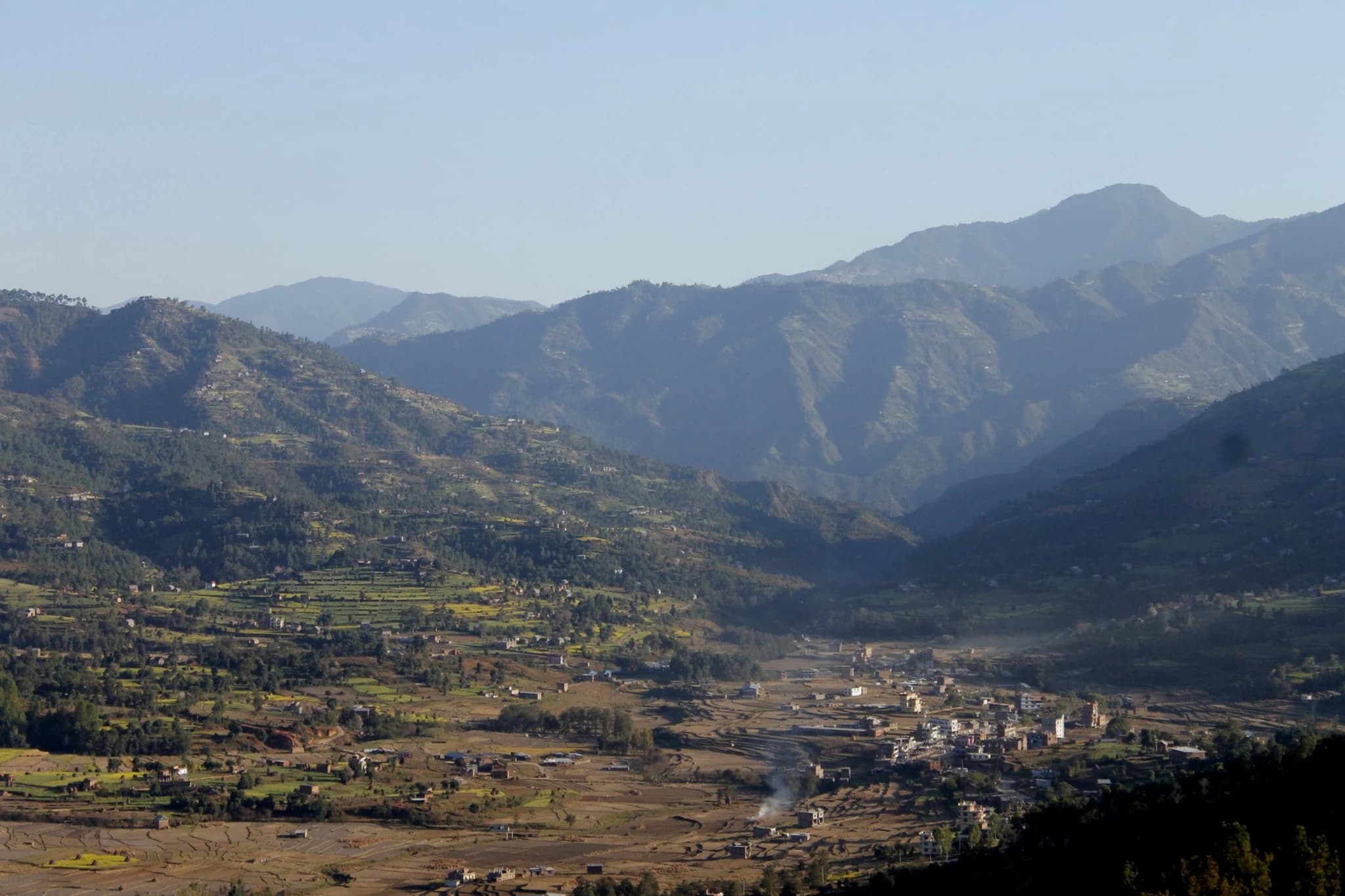
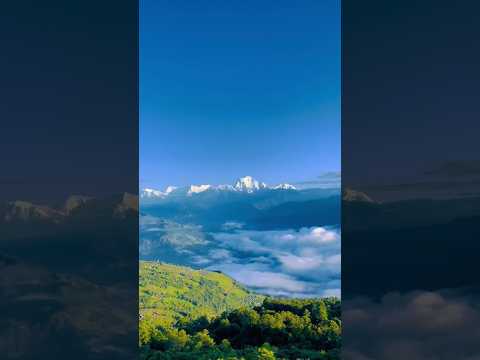
Bhakunde Village, nestled high on the southern amphitheater ridge of Kathekhola Rural Municipality Ward 10 at an elevation of 2,200 metres, is recognized as the pioneer model homestay village in Baglung District. Located just 15 kilometres south of Baglung Bazaar, Bhakunde is an idyllic settlement of stone and mud-plastered Gurung and Magar farmhouses set against lush terraced fields of mountain millet, corn, and organic vegetables. The village has gained widespread acclaim for its community-managed eco-homestay program, where travelers are welcomed into traditional households as honored family guests. Visitors enjoy authentic organic meals made from local ingredients—including stone-ground corn dhindo, homemade gundruk, fresh country chicken, nettle soup, and wild honey—and experience evening cultural gatherings featuring sacred Ghantu, Sorathi, and folk Salaijo songs performed around open hearths. Bhakunde also boasts wonderful natural attractions. Just a short walk above the main village lies Hira Tal (Diamond Lake), a scenic natural pond that mirrors the surrounding mountain ridges, as well as the historic Bhakunde View Tower. From this vantage point, travelers are treated to breathtaking sunrise panoramas stretching from Mount Dhaulagiri (8,167 m) and Gurja Himal across the Nilgiri massif to Annapurna South, Hiunchuli, and the distinctive silhouette of Machhapuchhre (Fishtail).
Bhakunde Village, nestled high on the southern amphitheater ridge of Kathekhola Rural Municipality Ward 10 at an elevation of 2,200 metres, is recognized as the pioneer model homestay village in Baglung District. Located just 15 kilometres south of Baglung Bazaar, Bhakunde is an idyllic settlement of stone and mud-plastered Gurung and Magar farmhouses set against lush terraced fields of mountain millet, corn, and organic vegetables. The village has gained widespread acclaim for its community-managed eco-homestay program, where travelers are welcomed into traditional households as honored family guests. Visitors enjoy authentic organic meals made from local ingredients—including stone-ground corn dhindo, homemade gundruk, fresh country chicken, nettle soup, and wild honey—and experience evening cultural gatherings featuring sacred Ghantu, Sorathi, and folk Salaijo songs performed around open hearths. Bhakunde also boasts wonderful natural attractions. Just a short walk above the main village lies Hira Tal (Diamond Lake), a scenic natural pond that mirrors the surrounding mountain ridges, as well as the historic Bhakunde View Tower. From this vantage point, travelers are treated to breathtaking sunrise panoramas stretching from Mount Dhaulagiri (8,167 m) and Gurja Himal across the Nilgiri massif to Annapurna South, Hiunchuli, and the distinctive silhouette of Machhapuchhre (Fishtail).
1 available
2 available
YouTube
Open YouTube
YouTube
Open YouTube
Discover More

Baglung Kalika Bhagwati Temple, nestled inside a lush sacred forest at an elevation of 1,020 metres in Baglung Municipality Ward 1, is one of the most venerated Shakti Peeth pilgrimage shrines in western Nepal. Perched strategically on a scenic terrace above the confluence of the sacred Kali Gandaki and Kathekhola rivers, the sanctuary dates back to the late 16th century (circa 1590 BS). Historical chronicles record that King Pratap Narayan Singh Malla of the Chaubisi principality of Galkot received the divine image of Goddess Kalika as part of the royal dowry upon his wedding to the princess of Palpa. While bringing the goddess to his capital at Harichaur, the royal entourage rested in this tranquil woodland grove, where the deity miraculously established her divine presence and refused to be moved further. The temple is built in classic multi-tiered Nepalese pagoda style, adorned with intricately carved wooden struts, gilded pinnacles (Gajur), and sacred copper repousse entry doors flanked by ferocious guardian lion figures. Surrounding the sanctum sanctorum are subsidiary shrines dedicated to Lord Shiva, Ganesh, Hanuman, and Radha-Krishna. The temple precinct is enveloped by towering oak, sal, and pine trees inhabited by troupes of holy rhesus macaques, creating a tranquil ambiance of timeless spiritual reverence. Baglung Kalika attracts hundreds of thousands of Hindu devotees from across Nepal and northern India throughout the year. The shrine witnesses tremendous spiritual gatherings during Chaite Dashain and the autumn Bada Dashain festival, when elaborate Tantric rituals, animal offerings, and continuous devotional music reverberate through the hills. Adjacent to the temple grounds is the historic Chaite Dashain Mela ground, home to one of western Nepal's oldest cultural and agricultural trade fairs.

The Baglung-Parbat Suspension Bridge (officially named the Gandaki Golden Bridge or Gandaki Sunaulo Jhula), spanning the dramatic Kali Gandaki River canyon between Bangechaur in Baglung Municipality Ward 1 and Aduwabari in Kusma Municipality Ward 1 of Parbat District, is an engineering marvel and one of the longest single-span pedestrian suspension footbridges in the world. Completed in July 2020 at a total length of 567 metres (1,860 feet), the bridge hangs suspended at a breathtaking height of 122 metres above the roaring waters of the Kali Gandaki River. The bridge was engineered to provide direct pedestrian and light transport connectivity between Baglung Bazaar and Kusma, reducing a arduous two-hour trek down the river canyon to an exhilarating ten-minute stroll across the abyss. Built with state-of-the-art steel cable suspension technology and equipped with anti-sway wind anchors and safety mesh, the bridge has rapidly transformed into a premier national landmark and sightseeing attraction. Walking across the expanse of the Gandaki Golden Bridge offers visitors a thrilling perspective of one of the deepest river gorges in the world. Looking northward, pedestrians can gaze up the Kali Gandaki canyon toward the towering snowy summit of Dhaulagiri I (8,167 m), while looking down reveals the turquoise river rapids rushing past terraced cliff faces. The bridge is illuminated in the evenings, drawing photographers, tourists, and locals enjoying twilight promenades.

Dhorpatan Hunting Reserve, gazetted in 1987 and encompassing 1,325 square kilometres across the junction of Baglung, Myagdi, and Rukum East districts, is Nepal's only established hunting reserve and one of the country's most pristine high-altitude ecological sanctuaries. The reserve is anchored by the breathtaking Dhorpatan Valley, a vast, flat sub-alpine depression situated at an altitude of approximately 2,850 metres, surrounded by towering snow-capped crests of the Dhaulagiri and Gurja Himal ranges. Ecologically, Dhorpatan spans an dramatic altitudinal gradient from 2,000 metres up to 7,246 metres at Churen Himal. It encompasses lush montane oak-rhododendron woodlands, temperate blue pine and fir forests, expansive alpine moors, and barren glaciated moraines. The reserve is internationally famous for conserving healthy populations of the Himalayan blue sheep (Bharal) and Himalayan tahr, which graze along the craggy scree slopes. It also harbors endangered snow leopards, Himalayan musk deer, red pandas, Himalayan black bears, and the vibrant Danphe (Himalayan monal). Under strict conservation regulation, sustainable sport hunting permits are issued through international auction by the Department of National Parks and Wildlife Conservation across seven designated hunting blocks (Seng, Dogadi, Gustang, Barse, Fagune, Surtibang, and Sundaha). Beyond hunting, Dhorpatan is an extraordinary wilderness trekking and cultural destination. The valley is home to a historic Tibetan refugee settlement with the traditional Dhorpatan Buddhist Gompa, an alpine grass airstrip, and ancient migratory grazing routes used by Magar and Chhetri transhumant pastoralists.

Gaighat Waterfall, situated at an altitude of approximately 950 metres in Galkot Municipality Ward 3, is the premier natural waterfall and eco-tourism attraction in the Galkot river valley of Baglung District. Plunging more than 80 metres down a near-vertical cliff of layered limestone and black schist rock, the waterfall drops into a wide, churning emerald pool surrounded by dense subtropical broadleaf forests and moss-draped canyon walls. Fed by the pristine highland tributaries flowing from the high ridges of Ghumte Lekh, the waterfall roars with immense volume during the monsoon and early autumn months, creating a pervasive mist and vibrant rainbows that dance across the rocky gorge on sunny afternoons. The natural plunge pool at the base provides a refreshing swimming and cooling spot for hikers and domestic travelers following the Mid-Hill Highway corridor. In recent years, the Galkot municipal government and local tourism development committees have developed well-maintained stone stairways, protective railings, viewpoint resting pavilions, and pedestrian suspension footbridges to facilitate safe access for visitors. Gaighat Waterfall serves as a primary nature excursion for travelers exploring the historic Malla heritage of Harichaur and the trekking routes climbing to Ghumte Mountain.

Panchakot Dham, perched commanding on the crest of Panchakot Hill at an altitude of 1,750 metres in Baglung Municipality Ward 6, is one of the most ambitious and magnificent Hindu spiritual and cultural pilgrimage complexes built in modern Nepal. Conceived and established under the spiritual guidance of revered Vedic saint Swami Shri Kamalnayanacharya, the complex spans across the historic confluence zone of five ancient hilltop forts (Kot)—namely Karikot, Majhkot, Rayachaurkot, Sansarkot, and Dhaneshwarkot—which once defended the Galkot-Baglung hill principalities. The centerpiece of Panchakot Dham is a monumental religious landscape featuring grandiose carved-stone temple architectures built in authentic North Indian and classical Rajasthani style. Prominent landmarks include the monumental Gandaki Maha-Ghanta (a massive brass and alloy bell weighing 5,555 kilograms, considered one of the largest ceremonial bells in the world), the multi-tiered Sish Mahal (palace of glass), and shrines dedicated to Lord Venkateshwara, Lord Vishnu, and Radha-Krishna. The site also operates an active Gurukul Veda-Vidyashram preserving ancient Sanskrit chanting, Vedic rituals, and cowshed sanctuaries (Goshala). Beyond its monumental spiritual significance, Panchakot offers one of the finest 360-degree viewpoints in the central mid-hills. Visitors on clear mornings are greeted by panoramic vistas of Mount Dhaulagiri (8,167 m), Annapurna South, Nilgiri, and the sacred Kali Gandaki gorge twisting through deep canyon ridges beneath the clouds.